Skip to content
Isaimozhi
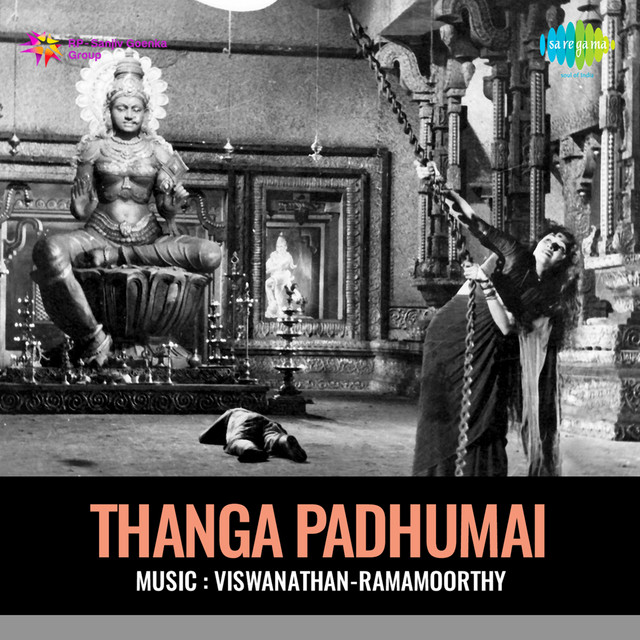
Thanga Padhumai album cover
Lyrics & meaning

Vizhi Vel Veechile

From Thanga Padhumai · 1959

Lyricist
Udumalai Narayanakavi
Singers
K. Jamunarani, A. P. Komala
Music director
Vishwanathan-Ramamoorthy
Movie name
Thanga Padhumai
Movie release year
1959
Lyrics added on
1 Jul 2025

Lyrics & meaning

♫ Tanglish lyrics
↻ English translation
Seeraarum sadhuranga saenaiyanjavae
Nindru poraadum balavaangal yaarum konjavae
Female Chorus :Nalla seeraarum sadhuranga saenaiyanjavae
Nindru poraadum balavaangal yaarum konjavae
Vandhu naeril thanjamae endru paaril konjavae
Pennin paniyalaraai sollai kaelaaroo
Female Chorus :Pennin paniyalaraai sollai kaelaaroo
Padai kattuvaar thamakku idai kattinaal
Female Chorus :Annanadai kattinaal pinnal jadai kattinaal
Baya bakthiyodu patchandhanai kattaaroo
Female :Muthu pal kattinaal padithu sol kattum navalarum
Paattu paadi pallai pallai kattaaroo
Female Chorus :Kaadhal paattu paadi pallai pallai kattaaroo
Female :Pennin paniyalaraai sollai kaelaaroo
Pen kulathai peigal endra pithar thammayae
Pendu pillaikutti ullavaraaai mattri viduvom
Pen kulathai peigal endra pithar thammayae
Pendu pillaikutti ullavaraaai mattri viduvom
Indha mandalathil kaanbathellaam sakthimayamae
Endrae maanbuthanai naangal parai saattri varuvom
Female Chorus :Pennaal aagadhadhum inimelyedhu
Pennaal aagadhadhum inimelyedhu
Even as the grandest armies tremble in fear,
The mighty warriors who stand and fight will soften and plead,
Female Chorus: Even as the grandest armies tremble in fear,
The mighty warriors who stand and fight will soften and plead,
They will come right to us seeking refuge and flatter us on this earth,
Won't they become a woman's servants and obey her words?
Female Chorus: Won't they become a woman's servants and obey her words?
To those who marshal armies, if she sways her slender waist,
Female Chorus: If she walks with the grace of a swan and braids her hair,
Won't they bind themselves to her with devotion and affection?
Female: If she flashes her pearl-like smile, even scholars who craft fine words—
Won't they sing songs and grin helplessly?
Female Chorus: Won't they sing love songs and grin helplessly?
Female: Won't they become a woman's servants and obey her words?
Those mad fools who called womankind devils,
We will turn them into family men with wives and children!
Those mad fools who called womankind devils,
We will turn them into family men with wives and children!
Everything seen across this world is the embodiment of Shakti (divine feminine power),
And we will proudly proclaim this great truth to all!
Female Chorus: Is there anything impossible for a woman anymore?
Is there anything impossible for a woman anymore?
Female
Female
Female
Female

Beyond the translation

Overall song meaning

This upbeat and empowering dance song from 'Thanga Padhumai' (1959) celebrates the undeniable power, charm, and supreme influence of women over men and society. The song playfully mocks arrogant men, fierce warriors, and learned scholars who boast of their strength, pointing out how easily they surrender and become devoted companions when enchanted by a woman's grace, beauty, and wit. Written with strong progressive undertones by Udumalai Narayanakavi, the song dismantles patriarchal misogyny—specifically refuting old adages that branded women as 'devils.' It declares that women are the architects of domestic life who tame wild men into responsible householders. Concluding on an empowering note, it proclaims that the entire universe runs on Shakti (feminine energy) and that nothing is impossible for a woman.

Writing craft

Poetic devices

Iyaipu (Rhyming Refrain / End Rhyme)

Pennin paniyalaraai sollai kaelaaroo / Baya bakthiyodu patchandhanai kattaaroo

The repetitive ending suffixes '-aaroo' ('kaelaaroo', 'kattaaroo') create a rhythmic, musical end-rhyme across multiple lines.

Metaphor (Uvamaani)

Muthu pal kattinaal

'Muthu pal' compares bright, beautiful teeth directly to sparkling pearls.

Anaphora / Polysemic Repetition (Sollani)

Padai kattuvaar... idai kattinaal... jadai kattinaal... pallai kattaaroo

The root verb 'kattu' (to tie/build/braid/show) is creatively repeated across multiple contexts to build internal cadence and punning rhymes.

Muran (Antithesis)

Pen kulathai peigal endra pithar thammayae / Pendu pillaikutti ullavaraaai mattri viduvom

Contrasts the absurd claim that women are 'devils' with their actual constructive power to convert reckless men into gentle family patriarchs.

Did you know?

Trivia

'Thanga Padhumai' (1959) starred Sivaji Ganesan and Padmini. The song features music composed by the legendary duo Viswanathan–Ramamoorthy, with lyrics by the renowned rationalist poet Udumalai Narayanakavi. Known for weaving social reform, feminist empowerment, and anti-superstition messaging into mainstream film lyrics, Narayanakavi used this song to challenge traditional misogynistic proverbs of the era. The song was rendered enthusiastically by K. Jamunarani and A. P. Komala.

Keep listening

Songs with a similar feeling

From the same album

More songs from Thanga Padhumai

View album

Spot an issue?

Help us improve the lyrics or English translation.