Skip to content
Isaimozhi
Lyrics & meaning

Kuzhanthaiyum Deivamum Kondadum

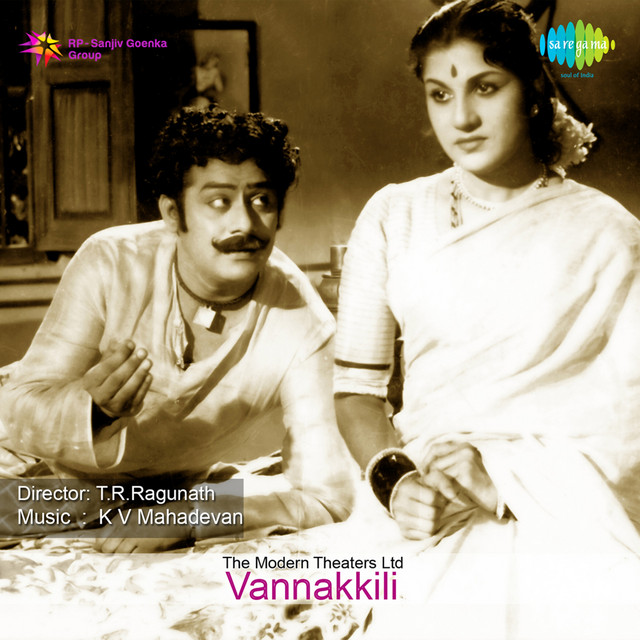
From Vannakili · 1959

Lyricist
A. Maruthakasi
Singer
P. Susheela
Music director
K. V. Mahadevan
Details
Vannakili1959

Lyrics & meaning

Tanglish lyrics English translation
Female
Kuzhanthaiyum deivamum kondadum idathilaeA child and God dwell in the place where they are celebrated.
Aiyyikiyam aagividum idhu unmai jegathilaeThey become one with that place; this is an eternal truth in the world.
Female
Kuzhanthaiyum deivamum kondadum idathilaeA child and God dwell in the place where they are celebrated.
Aiyyikiyam aagividum idhu unmai jegathilaeThey become one with that place; this is an eternal truth in the world.
Kuzhanthaiyum deivamum kondadum idathilaeA child and God dwell in the place where they are celebrated.
Female
Mazhai pol karunaiyulla manamirundhaalaeIf one possesses a heart filled with rain-like compassion,
Vaari aravanaikkum gunamirundhaalaeAnd a generous nature that warmly gathers and nurtures,
Mazhai pol karunaiyulla manamirundhaalaeIf one possesses a heart filled with rain-like compassion,
Vaari aravanaikkum gunamirundhaalaeAnd a generous nature that warmly gathers and nurtures,
Maatrandhaai enbadhaiyae maranthidum pillaiThe child will forget that one is merely a stepmother,
Malar mugam katti vandhu amarndhidum madiyilaeAnd showing its blossom-like face, it will come and sit on the lap.
Female
Kuzhanthaiyum deivamum kondadum idathilaeA child and God dwell in the place where they are celebrated.
Aiyyikiyam aagividum idhu unmai jegathilaeThey become one with that place; this is an eternal truth in the world.
Kuzhanthaiyum deivamum kondadum idathilaeA child and God dwell in the place where they are celebrated.
Female
Petraal thaan pillai enbathillaiyaeA child isn't defined solely by the mother who gives birth,
Adharku suttramendrum sondhamendrum illaiyaeNor is it bound strictly by formal kinship or lineage.
Petraal thaan pillai enbathillaiyaeA child isn't defined solely by the mother who gives birth,
Adharku suttramendrum sondhamendrum illaiyaeNor is it bound strictly by formal kinship or lineage.
Vattardha anbu ennum amudhaiyaeThe endless nectar known as pure love,
Yaar vazhanginaalum mayangum deivam kuzhandhaiyaeWhosoever offers it, the divine child is captivated by them.
Female
Kuzhanthaiyum deivamum kondadum idathilaeA child and God dwell in the place where they are celebrated.
Aiyyikiyam aagividum idhu unmai jegathilaeThey become one with that place; this is an eternal truth in the world.
Kuzhanthaiyum deivamum kondadum idathilaeA child and God dwell in the place where they are celebrated.

Beyond the translation

Song interpretation

The song 'Kuzhanthaiyum Deivamum Kondadum Idathilae' is a profound moral philosophy set in a soothing lullaby structure. It equates a child to a divine entity, noting that both a child and God belong not to physical places or biological bounds, but to wherever they are genuinely loved, cherished, and honored. It reflects on how love transcends biological motherhood, showing that a stepmother or guardian who treats a child with unconditional, rain-like kindness will earn the child's true affection.

Writing craft

Poetic devices

Simile (Upamai)

Mazhai pol karunaiyulla manamirundhaalae

The compassion in one's heart is directly compared to 'mazhai' (rain), which falls selflessly and abundantly to nourish everything.

Metaphor (Uruvagam)

Malar mugam katti vandhu amarndhidum madiyilae

The child's radiant, innocent face is metaphorically called a flower ('malar mugam').

Metaphor (Uruvagam)

Vattardha anbu ennum amudhaiyae

Unending love is conceptualized as celestial nectar ('amudhu').

Parallelism / Analogy

Kuzhanthaiyum deivamum kondadum idathilae

Draws a direct spiritual parallel between a child ('Kuzhanthai') and God ('Deivam'), establishing their shared nature of being drawn only to sincere devotion and love.

Did you know?

Trivia

Composed by K. V. Mahadevan with lyrics by A. Maruthakasi, this song from 'Vannakili' (1959) became one of Tamil cinema's most famous philosophical adages regarding parenting and love. The core line 'Kuzhanthaiyum Deivamum Kondadum Idathilae' remains a popular proverb in Tamil culture to this day.

Keep listening

More from Vannakili