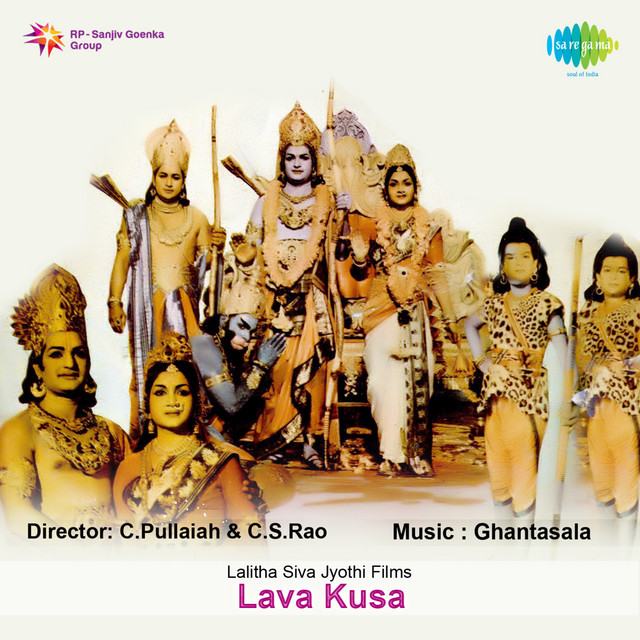
Veera Madha
From Lava Kusa · 1963
- Lyricist
- A. Maruthakasi
- Singer
- P. Susheela
- Music director
- Ghantasala
- Details
- Lava Kusa1963
Lyrics & meaning
| ♫ Tanglish lyrics | ↻ English translation |
|---|---|
| Female | |
| Veeramaadha kousalyaa devi pettra | Born to the heroic mother, Goddess Kausalya, |
| Menmai mighu raghuraaman | The highly exalted Raghurama, |
| Asvamedha yaagam adhu seidhidavae | In order to perform the grand Ashvamedha sacrifice, |
| Ennam kondu yaarukkum anjaamal | With resolute intent and fearing no one, |
| Female | |
| Puravi thannai theeramighu sathruganan soozha | Has released the sacrificial horse, escorted by the valiant Shatrughna, |
| Inaal dhisai ettum viduthullaan | Across all eight directions on this day. |
| Idhai padikka maarthatti varum veerar varttum | Let the brave warriors who challenge this step forward beating their chests, |
| Indrael mandiyittu adi panindhu vananga vendum | Otherwise, let them kneel and bow down at his feet in surrender. |
வீரமாதா கௌசல்யா தேவி பெற்ற
மேன்மை மிகு ரகுராமன்
அஸ்வமேத யாகமது செய்திடவே
எண்ணம் கொண்டு யாருக்கும் அஞ்சாமல்
Born to the heroic mother, Goddess Kausalya,
The highly exalted Raghurama,
In order to perform the grand Ashvamedha sacrifice,
With resolute intent and fearing no one,
புரவி தன்னை தீரமிகு சத்ருக்னன் சூழ
இந்நாள் திசை எட்டும் விடுத்துள்ளான்
இதை பிடிக்க மார்தட்டி வரும் வீரர் வரட்டும்
இன்றேல் மண்டியிட்டு அடிபணிந்து வணங்க வேண்டும்
Has released the sacrificial horse, escorted by the valiant Shatrughna,
Across all eight directions on this day.
Let the brave warriors who challenge this step forward beating their chests,
Otherwise, let them kneel and bow down at his feet in surrender.
Veeramaadha kousalyaa devi pettra
Born to the heroic mother, Goddess Kausalya,
Menmai mighu raghuraaman
The highly exalted Raghurama,
Asvamedha yaagam adhu seidhidavae
In order to perform the grand Ashvamedha sacrifice,
Ennam kondu yaarukkum anjaamal
With resolute intent and fearing no one,
Puravi thannai theeramighu sathruganan soozha
Has released the sacrificial horse, escorted by the valiant Shatrughna,
Inaal dhisai ettum viduthullaan
Across all eight directions on this day.
Idhai padikka maarthatti varum veerar varttum
Let the brave warriors who challenge this step forward beating their chests,
Indrael mandiyittu adi panindhu vananga vendum
Otherwise, let them kneel and bow down at his feet in surrender.
Beyond the translation
Song interpretation
This passage is a royal proclamation announcing the Ashvamedha Yagna performed by Lord Rama, the glorious descendant of the Raghu dynasty born to Queen Kausalya. Accompanied by his courageous brother Shatrughna, the royal horse is set free to roam across all eight directions as a symbol of unchallenged sovereignty. The decree written on the horse serves as a stern ultimatum to all ruler and warriors across the lands: those with the courage to dispute Lord Rama's supremacy must step forward to fight, while all others must submit, kneel, and offer homage at his feet.
Writing craft
Poetic devices
Monai (Initial Alliteration)
“Veeramaadha kousalyaa devi pettra / Menmai mighu raghuraaman”
Rhythmic pairing of initial consonantal sounds creating musical cadence across lines.
Veera Rasa (Heroic Diction)
“Idhai padikka maarthatti varum veerar varttum / Indrael mandiyittu adi panindhu vananga vendum”
Use of evocative, assertive Tamil words such as 'maarthatti' (chest-thumping challenge) and 'mandiyittu' (kneeling) to evoke intense honor, pride, and martial valor.
Did you know?
Trivia
Lava Kusa (1963) was a landmark film and the first full-length color feature in South Indian cinema. Composed by Ghantasala, this specific proclamation song sets up the dramatic conflict of the story: young Lava and Kusa read this challenge attached to the horse's forehead and boldly capture it, leading to a clash with their uncle Shatrughna and eventually Lord Rama himself.
Keep listening
More from Lava Kusa
Lava Kusa
Lava Kusa
Lava Kusa
Lava Kusa
Lava Kusa
Lava Kusa