Skip to content
Isaimozhi
Lyrics & meaning

Jagam Pugazhum

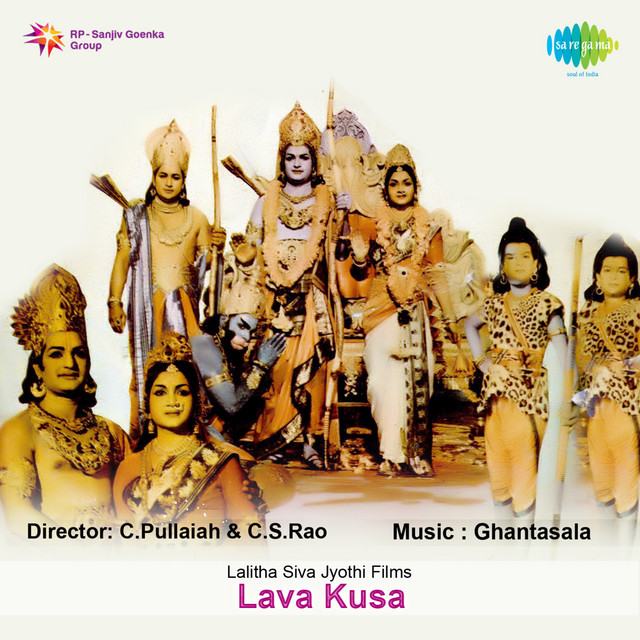
From Lava Kusa · 1963

Lyricist
A. Maruthakasi
Singers
P. Susheela, P. Leela
Music director
Ghantasala
Details
Lava Kusa1963

Lyrics & meaning

Tanglish lyrics English translation
Female
Ha…aa.. aa.. aa..Ah... aa... aa... aa...
Female
Aayothi mannan dhsarathanin arunthavathaalThrough the supreme penance of King Dasaratha of Ayodhya,
Avan manaivi kousalya kaikeayi sumithiraiIn the wombs of his wives Kausalya, Kaikeyi, and Sumitra,
Karuvinile uruvaanaar raama laxkhmanarRama and Lakshmana were formed as embryos,
Kanivulla barathan sathrukknar naalvarAlong with the compassionate Bharata and Shatrughna, making four sons.
Female
Aanavathaal arivizhantha ParasuramanParasurama, who had lost his wisdom due to arrogance,
Aganthaithanai adakki raman vettri kondaanRama subdued his ego and emerged victorious.
Arum puthalvan veerathai kanda mannanSeeing the heroism of his precious son, the king
Alavilla aanatha nilayai kandaan….Attained a state of boundless joy...
Female
Antha sollai keatta mannarHearing those (cruel) words, the king
Marana moorchai adaintha pinnarFainted in a state near death;
Ramanaiyum azhaikka seithaalShe then summoned Rama,
Female
Thanthaiyunai vanam pogach solliTelling him, 'Your father orders you to go to the forest,
Thambi barathanukku magudathai thanthaar endraalAnd has granted the crown to your younger brother Bharata.'
Female
Gangaikarai athiban panbil uyarntha guganGuhan, the ruler of the Ganges bank, noble in character,
Anbaal raamabiran nanbannaakinaanBecame a close friend of Lord Rama through his pure love.
Gangaikarai athiban panbil uyarntha guganGuhan, the ruler of the Ganges bank, noble in character,
Anbaal raamabiran nanbannaakinaanBecame a close friend of Lord Rama through his pure love.
Female
Panjavadi sollum paadhayai kaattinaanHe showed the path leading to Panchavati;
Panjavadi sollum paadhayai kaattinaanHe showed the path leading to Panchavati.
Anjana vannan angu sendru thanginaanThe dark-complexioned Rama went and stayed there.
Female
Ravananin thangai kodiyaval soorppanagaiRavana's evil sister, Surpanakha,
Raamabiran meedhu maiyal kondaalFell in infatuation with Lord Rama.
Female
Nenjam kanlaagi kangal kulamaagiWith heart turning into burning coal and eyes becoming a pond of tears,
Female :Thambiyudan deviyai thedi sendraanHe set out with his younger brother searching for his divine consort,
Female :Raaman thedi sendraanRama went searching.
Female
Vazhyil jadayuvaal vivaramellam arinthaanOn the way, he learnt all the details through Jatayu;
Female :vaayu mainthan anumanin natpai kondaanHe gained the friendship of Hanuman, the son of the Wind god.
Female :Azhiyai thaandiye ilangai sendra anumaanHanuman, who crossed the ocean and reached Lanka,
Female :Annaiyai asokavanthil kandaan…Found the Divine Mother in the Ashoka grove...
Female
Atho sri raama chandira prabhuLook there, Lord Sri Ramachandra!
Female Chorus :Sir raaghavam dhasarathatmajam aprameyamSri Raghava, the son of Dasaratha, the immeasurable one,
SeethapadhimThe husband of Sita,
raghukulaanmyaikmeyamThe sole glory of the Raghu dynasty,
Aajaanubaagum aravintha thalaya thaadchamLong-armed, with lotus-petal-like eyes,
Raamam nisasara vinaasagaram namaami…!I bow to Rama, the destroyer of night-walking demons!

Beyond the translation

Song interpretation

This song is a condensed musical narration of the Ramayana epic up to Sundara Kandam, sung as a Harikatha-style ballad by young Lava and Kusa. It begins with the birth of the four princes to King Dasaratha, Rama's early feat of humbling Parasurama, Kaikeyi's boon leading to Rama's exile, and the deep friendship formed with Guha on the banks of the Ganges. It continues with their stay at Panchavati, the encounter with Surpanakha, the tragic abduction of Sita, Jatayu's sacrifice, and Rama's alliance with Hanuman. It concludes with Hanuman finding Sita in the Ashoka grove in Lanka and transitions into a revered Sanskrit hymn celebrating Sri Rama's divine qualities and valor.

Writing craft

Poetic devices

Metaphor / Imagery (Uvamai / Uruvagamaai)

Anjana vannan angu sendru thanginaan

'Anjana vannan' uses the dark pigment collyrium as a visual metaphor to describe Rama's striking dark complexion.

Hyperbole & Metaphor

Nenjam kanlaagi kangal kulamaagi

'Nenjam kanlaagi kangal kulamaagi' metaphorically describes extreme grief where the heart turns to burning embers and eyes swell like a lake of tears.

Monai (Initial Rhyme / Alliteration)

Aanavathaal arivizhantha Parasuraman / Aganthaithanai adakki raman vettri kondaan

Repetition of initial vowel sounds ('Aa') across lines creating poetic rhythm.

Sanskrit Stotram Incorporation (Linguistic Fusion)

Sir raaghavam dhasarathatmajam aprameyam

Seamless transition from Tamil narrative verse to traditional Sanskrit Sloka ('Sri Raghavam Dasarathatmajam...') for devotional climax.

Did you know?

Trivia

Lava Kusa (1963) was a landmark musical film produced simultaneously in Telugu and Tamil by Lalitha Sivaganam Films. Composed by Legendary maestro Ghantasala, the soundtrack remains one of the most celebrated classical-mythological film scores in South Indian cinema history. This particular sequence features Lava and Kusa performing the story of Ramayana in song format before Rama himself.

Keep listening

More from Lava Kusa