- Lyricist
- Thanjai N. Ramaiah Dass
- Singer
- Trichy Loganathan
- Music director
- Ghantasala
- Movie name
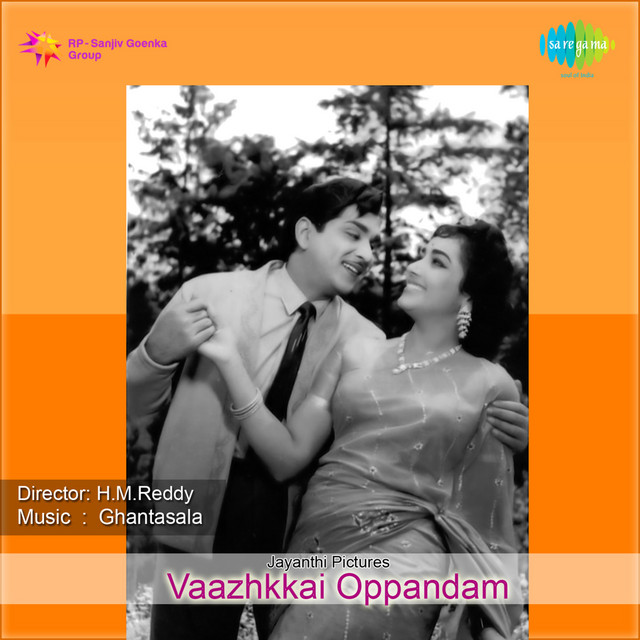
- Vazhkkai Oppandam
- Movie release year
- 1959
- Lyrics added on
- 16 Apr 2025
Lyrics & meaning
Beyond the translation
Overall song meaning
In this dramatic and romantic song from Vazhkkai Oppandam (1959), the male protagonist playfully compares himself to the mighty mythological king Ravana and praises celestial beauties like Rambha, Urvashi, Menaka, and Tilottama. Despite mentioning these legendary figures, he declares that his true devotion is reserved solely for his beloved, whom he addresses as his 'Mandodari'. He reassures her that no rival can ever take her place and promises to exalt her above all else if she accepts his love.
Writing craft
Poetic devices
Mythological Allusion (புராணக் குறிப்பு)
“Rambhaiyum urvashiyum / Menakai thilothamaiyin / Rasiganum naan allavoo / Raavanan naan allavoo / Etti nil mandothari bazaar.. (Mandothari references across lines 1-13). Mechanics: References celestial apsaras (Rambha, Urvashi, Menaka, Tilottama) and epic characters (Ravana, Mandodari) to exaggerate romantic longing and stature.”
Mōnai (Initial Letter Alliteration - மோனை)
“Raavum pagalum undhan aavalaal yengidum / Raavanan naan allavoo”
Rhetorical Question (வினா அணி)
“Rasiganum naan allavoo / Raavanan naan allavoo”
Hyperbole (உயர்வு நவிற்சி அணி)
“Unnai sirameedhil yettruven”
Did you know?
Trivia
The song from 'Vazhkkai Oppandam' (1959) features music composed by Ghantasala with lyrics by Thanjai N. Ramaiah Dass. Sung with theatrical flair by Trichy Loganathan, the song uses mythological metaphors to create a humorous and romantic mood typical of mid-20th century Tamil cinema drama.
Keep listening
Songs with a similar feeling
From the same album
More songs from Vazhkkai Oppandam
View albumSpot an issue?
Help us improve the lyrics or English translation.