- Lyricist
- Kannadasan
- Singer
- Vani Jairam
- Music director
- M. S. Vishwanathan
- Movie name
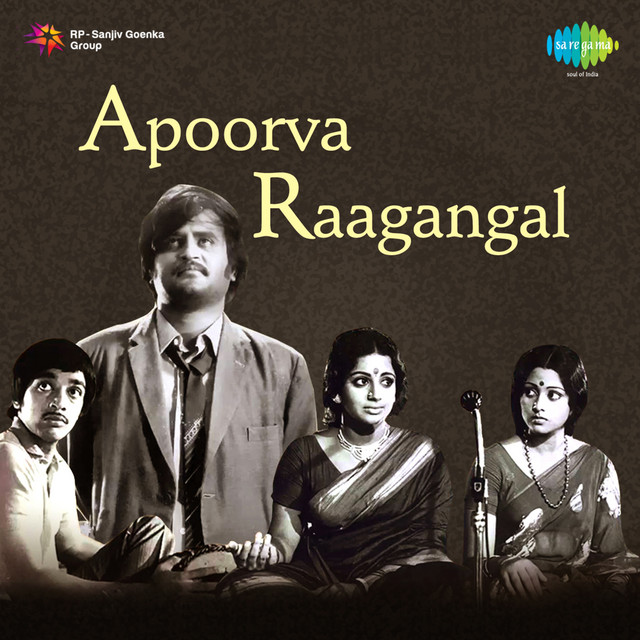
- Apoorva Raagangal
- Movie release year
- 1975
- Lyrics added on
- 27 Feb 2019
Lyrics & meaning
Beyond the translation
Overall song meaning
"Ezhu Swarangalukkul" is a deeply philosophical masterpiece from K. Balachander's 1975 film 'Apoorva Raagangal'. Lyricist Kannadasan draws a poetic parallel between music and human life: just as infinitely diverse melodies emerge from a mere seven musical notes (swaras), the human heart harbors endless unanswered questions, anxieties, and desires. The song reflects on existential uncertainty, noting how people waste their lives chasing illusory happiness and worrying endlessly about tomorrow, even when their immediate desires are fulfilled. Through poignant philosophical principles, the song urges individual responsibility and fortitude. It reminds us that empathy has limits—someone can weep for you, but no one can eat or live your life for you; individual duty must be performed by oneself. Furthermore, since neither our birth nor the future is within our control, fear is pointless once a path is set. By marching forward with spiritual faith and patience, sorrow will eventually dissolve like a passing cloud when time takes its favorable turn.
Writing craft
Poetic devices
Metaphor (Uruvam)
“Idhaya churangathul / Ethanai kelvi”
Compares the human heart to a deep, dark mine ('churangam') filled with countless unplumbed questions.
Simile (Uvamai Ani)
“Vedhanaiyum maarum megathai pola”
Compares human agony and grief to a passing cloud ('megathai pola'), highlighting their transient nature.
Iyaipu (End Rhyme)
“Aarambathin pirappum un kaiyil illai / Endrum aduthadutha nadappum un kaiyil illai”
Both lines end with the identical phrase 'un kaiyil illai' (is not in your hands), creating a rhythmic and lyrical emphasis.
Muran Ani (Antithesis / Contrast)
“Inbam thunbam edhilum / Kelvidhaan minjum”
Juxtaposes two contrasting human emotions—joy ('inbam') and sorrow ('thunbam')—to highlight that questioning remains constant in both states.
Did you know?
Trivia
This song won Vani Jairam the National Film Award for Best Female Playback Singer in 1975. Composed by legendary music director M. S. Viswanathan (MSV) in the classical Carnatic raagam Pantuvarali, it remains one of the most celebrated classical-philosophical songs in Tamil cinema. The film 'Apoorva Raagangal', directed by K. Balachander, marked the silver screen debut of Superstar Rajinikanth and was acclaimed for its bold, unconventional storylines.
Keep listening
Songs with a similar feeling
From the same album
More songs from Apoorva Raagangal
View albumSpot an issue?
Help us improve the lyrics or English translation.