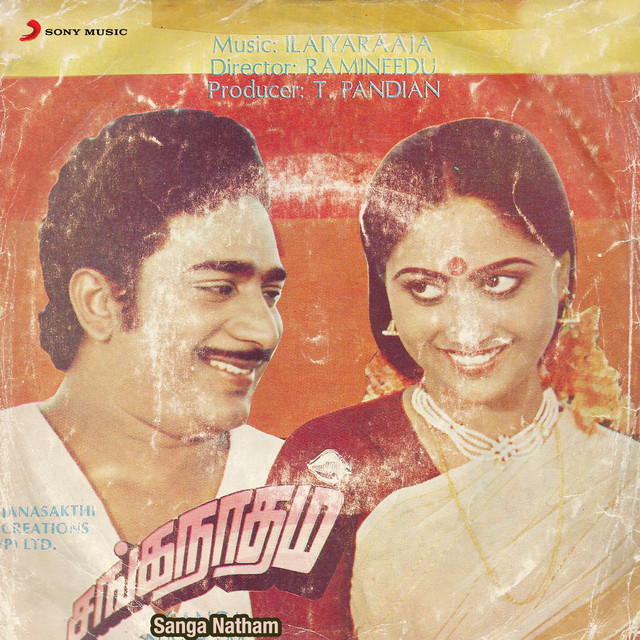
- Lyricist
- Vairamuthu
- Singers
- Vani Jairam, P. Jayachandran, K. J. Jesudass
- Music director
- Ilayaraja
- Movie name
- Sanga Natham
- Movie release year
- 1984
- Lyrics added on
- 10 Jan 2021
Lyrics & meaning
Beyond the translation
Overall song meaning
This song from 'Sanga Natham' (1984) is a powerful, revolutionary social critique aimed at corrupt authority figures, fraudulent leaders, and black-market exploiters. The lyrics mock the false promises made by politicians and corrupt institution heads who loot college funds and steal the hard-earned money ('neththik kaasa') of working-class people to live in luxury. It exposes how ordinary tricksters parade themselves as noble aristocrats ('seemaanunga') in an easily deceived society. The emotional trajectory moves from outrage over betrayal to a triumphant call for public justice and rebellion. The song declares that the corrupt must be exposed in the public square ('santhikku kondaanga'), handcuffed, and thrown into prison. It culminates in the unifying message that even the gentlest citizens—metaphorically described as flower-pickers—have gathered the courage to stand up, revolt, and strip the masks off their oppressors.
Writing craft
Poetic devices
Iyaipu (End Rhyme)
“Ada yaethedho sonnaanga / Ennanga senjaanga / Intha sathikaara koottatha santhikku kondaanga”
The line endings ('sonnaanga', 'senjaanga', 'kondaanga') share the same rhyming suffix '-aanga', creating a catchy rhythm suitable for a group rally song.
Metaphor
“Mogamoodi kizhunchu pochchu / Un moonchi therinju pochchu”
The 'ripped mask' serves as a metaphor for uncovering the hidden corrupt nature and false pretenses of the ruling class.
Monai (Initial Alliteration)
“Mogamoodi kizhunchu pochchu / Un moonchi therinju pochchu”
Repetition of the initial 'M' sound ('Mogamoodi' and 'Moonchi') creates phonetic harmony.
Idiom / Cultural Imagery
“Kazhutha malae oorkolam vara venum”
Parading someone on a donkey ('Kazhutha malae oorkolam') is a traditional Tamil idiom representing complete public shame and punishment for moral corruption.
Did you know?
Trivia
Written by acclaimed lyricist Vairamuthu for the 1984 film 'Sanga Natham', the song utilizes street-theater style folk rhythms and direct colloquial Tamil to capture the voice of a working-class uprising. During the 1980s, Tamil cinema saw a surge in politically charged songs addressing institutional corruption, and Vairamuthu's sharp imagery—such as 'neththik kaasa' (sweat-earned money) and 'poo killum koottam' (gentle flower pickers turning into protesters)—became a hallmark of his social reform lyricism.
Keep listening
Songs with a similar feeling
From the same album
More songs from Sanga Natham
View albumSpot an issue?
Help us improve the lyrics or English translation.