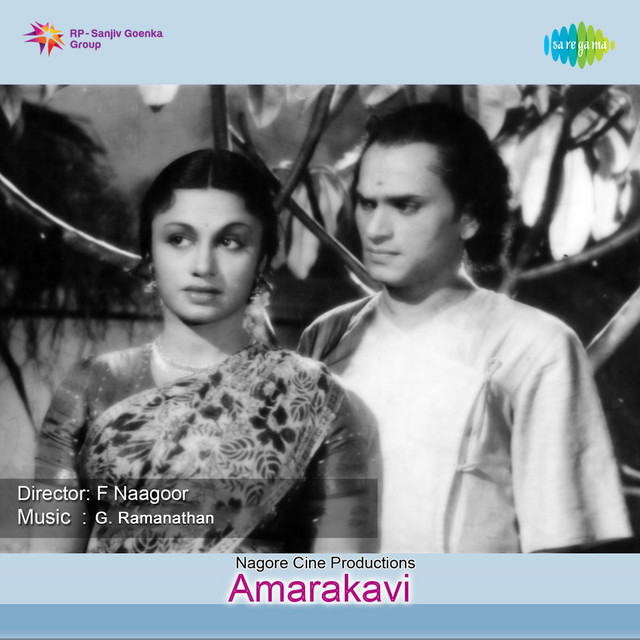
- Lyricist
- Ka. Mu. Sheriff
- Music director
- G. Ramanathan
- Movie name
- Amarakavi
- Movie release year
- 1952
- Lyrics added on
- 11 Aug 2025
Lyrics & meaning
Beyond the translation
Overall song meaning
This poignant, devotional, and philosophical song from 'Amarakavi' (1952) expresses the anguish of an innocent soul facing unjust persecution and suffering. Despite being falsely accused and tortured, the protagonist harbours no hatred or anger toward his tormentors. Instead, he recognizes that their cruelty stems from ignorance and prays to God for their enlightenment and forgiveness. To contextualize his suffering, he references great spiritual leaders of history—Lord Buddha, Jesus Christ, and Prophet Muhammad—all of whom endured intense trials and persecution in their pursuit to reform humanity and preach love. The song serves as a universal prayer for harmony, asking God to eliminate evil from the world and guide even the worst sinners onto the path of righteousness.
Writing craft
Poetic devices
Allusion (Religious/Historical)
“Arasanendra nilai thurandhu... / Pirambhu kondu adithittaar yesu... / Uthamaramaam mohamadu...”
The lyrics refer directly to Buddha, Jesus, and Prophet Muhammad to draw parallels between their historical persecution and the protagonist's own suffering.
Ethugai (Second-letter Rhyming)
“Perumbaara siluvai thannai thookka solli / Pirambhu kondu adithittaar yesu thannai”
The second consonant sound 'ra' rhymes in 'Perumbaara' (Line 13) and 'Pirambhu' (Line 14).
Anaphora (Repetition for Emphasis)
“Eesaa mann meedhilae / Theemaigal maaindhaega seivaai neeyae”
The deliberate repetition of these lines reinforces the protagonist's earnest prayer to God to rid the world of evil.
Did you know?
Trivia
Written by lyricist Ka. Mu. Sheriff and composed by G. Ramanathan, this song stands out for its secular vision, referencing Buddha, Jesus Christ, and Prophet Muhammad within a single composition. Performed by M. K. Thiyagaraja Bhagavathar (MKT), one of Tamil cinema's early superstars, the song reflected MKT's signature high-pitched classical vocal style during a time when his career was undergoing a revival in the 1950s.
Keep listening
Songs with a similar feeling
From the same album
More songs from Amarakavi
View albumSpot an issue?
Help us improve the lyrics or English translation.