Skip to content
Isaimozhi
Lyrics & meaning

Nilavai Paarthu Vaanam

From Savale Samali · 1971

Lyricist
Kannadasan
Singer
T. M. Soundararajan
Music director
M. S. Vishwanathan
Details
Savale Samali1971

Lyrics & meaning

Tanglish lyrics English translation
Male
Nilavai paarthu vaanam sonnadhuLooking at the moon, the sky said:
Ennai thodaadhae"Do not touch me."
Nizhalai paarthu boomi sonnadhuLooking at the shadow, the earth said:
Ennai thodaadhae"Do not touch me."
Male
Nilavai paarthu vaanam sonnadhuLooking at the moon, the sky said:
Ennai thodaadhae"Do not touch me."
Nizhalai paarthu boomi sonnadhuLooking at the shadow, the earth said:
Ennai thodaadhae"Do not touch me."
Nadhiyai paarthu naanal sonnadhuLooking at the river, the reed said:
Ennai thodaadhae"Do not touch me."
Naalai paarthu iravu sonnadhuLooking at tomorrow, the night said:
Ennai thodaadhae"Do not touch me."
Male
Nilavai paarthu vaanam sonnadhuLooking at the moon, the sky said:
Ennai thodaadhae"Do not touch me."
Nizhalai paarthu boomi sonnadhuLooking at the shadow, the earth said:
Ennai thodaadhae"Do not touch me."
Male
Pudhiyadhallavae theendaamai enbadhuUntouchability is nothing new;
Pudhumaiyallavae adhai neeyum sonnadhuIt is no novelty that you said it too.
Pudhiyadhallavae theendaamai enbadhuUntouchability is nothing new;
Pudhumaiyallavae adhai neeyum sonnadhuIt is no novelty that you said it too.
Sonna vaarthaiyum iraval thaanadhu…Even the words you spoke were borrowed...
Sonna vaarthaiyum iraval thaanadhuEven the words you spoke were borrowed,
Thiru neelakandarin manaivi sonnadhuSaid long ago by the wife of Thiru Neelakandar.
Male
Nilavai paarthu vaanam sonnadhuLooking at the moon, the sky said:
Ennai thodaadhae"Do not touch me."
Nizhalai paarthu boomi sonnadhuLooking at the shadow, the earth said:
Ennai thodaadhae"Do not touch me."
Male
Thaalathai raagam thodaadha podhilaeWhen rhythm does not touch melody,
Geedhathai nenjam thodaamal pogumaeThe song fails to reach the heart.
Thandhai thannaiyae thaai thodaavidilIf a mother does not touch the father,
Naanum illaiyae neeyum illaiyaeNeither I would exist, nor would you.
Male
Nilavai paarthu vaanam sonnadhuLooking at the moon, the sky said:
Ennai thodaadhae"Do not touch me."
Nizhalai paarthu boomi sonnadhuLooking at the shadow, the earth said:
Ennai thodaadhae"Do not touch me."
Male
Thangam edutha kaiThe hands that mined the gold,
Adhu thangam paarthadhaaDid they ever get to enjoy that gold?
Dharmam kaatha kai sThe hands that safeguarded justice,
Sama dharmam kandadhaaDid they ever witness social equality?
Aalayam seivom angae anumadhi illaiWe build the temple, yet entry is forbidden there.
Nee andha koottamae idhil adhisayam illaiYou belong to that same group, so this is no surprise.
Male
Nilavai paarthu vaanam sonnadhuLooking at the moon, the sky said:
Ennai thodaadhae"Do not touch me."
Nizhalai paarthu boomi sonnadhuLooking at the shadow, the earth said:
Ennai thodaadhae"Do not touch me."

Beyond the translation

Song interpretation

Nilavai Paarthu Vaanam Sonnadhu is a deeply philosophical and socially conscious song from the 1971 Tamil film 'Savale Samali', written by Kaviarasu Kannadasan. The song critiques social discrimination, rejection, and the practice of untouchability by using natural metaphors, such as the distant sky refusing to touch the moon, the earth refusing the shadow, and night refusing tomorrow.

Writing craft

Poetic devices

Personification

Nilavai paarthu vaanam sonnadhu

Inanimate entities like the sky, earth, night, and river are given human attributes of speech and rejection.

Monai (Initial Rhyme / Alliteration)

Nilavai paarthu vaanam sonnadhu / Nizhalai paarthu boomi sonnadhu

Repetition of the initial sound 'Ni' in 'Nilavai' and 'Nizhalai' creates a rhythmic flow.

Ethugai (Second Letter Agreement)

Thangam edutha kai / Dharmam kaatha kai

The second consonant sound 'ng' / 'r' creates structural harmony across lines.

Rhetorical Question

Thangam edutha kai / Adhu thangam paarthadhaa

A poignant question emphasizing social inequality, asking if laborers who mine gold ever get to share in its prosperity.

Did you know?

Trivia

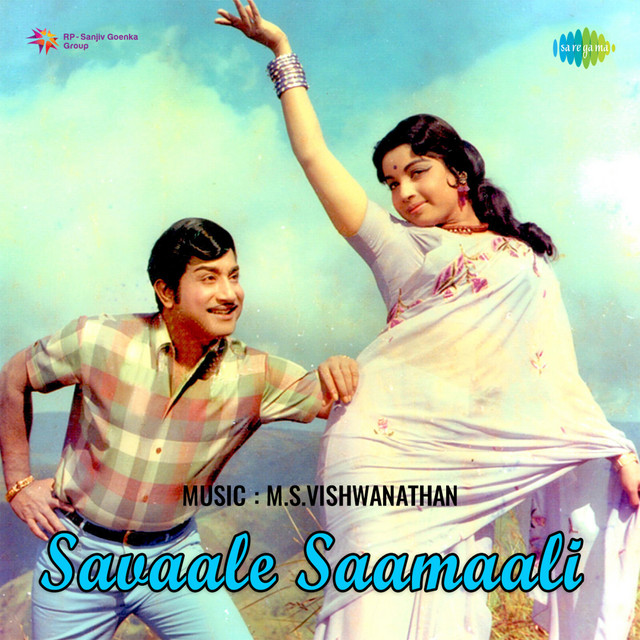
The song from 'Savale Samali' (1971), starring Sivaji Ganesan and Jayalalithaa, features music composed by M. S. Viswanathan and vocals by T. M. Soundararajan. Kannadasan references the Tamil Saivite saint Thiruneelakantar, whose wife took a pledge not to touch him after a disagreement, drawing a parallel to personal and societal untouchability.

Keep listening

More from Savale Samali