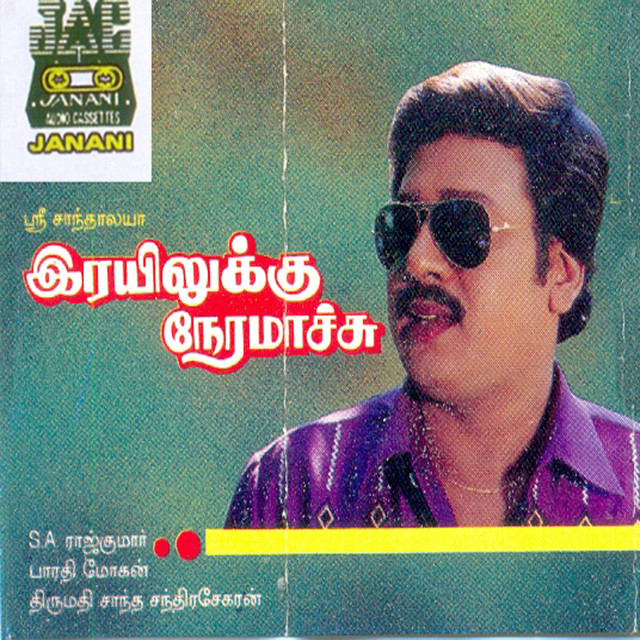
- Lyricist
- Mahakavi Subramanya Bharathiyaar
- Singer
- Rajkumar Bharathi
- Music director
- S. A. Rajkumar
- Movie name
- Rayilukku Neramachu
- Movie release year
- 1988
- Lyrics added on
- 11 Apr 2021
Lyrics & meaning
Beyond the translation
Overall song meaning
In this powerful poem written in the traditional 'Kili Kanni' format, Mahakavi Subramanya Bharathiyar sharply critiques the hypocrisy and cowardice of contemporary society. He condemns people who boast about women's honor and religious devotion but fail to stand up against injustice. When women are abused and oppressed, people act like fearful fools, prioritizing their own survival over righteousness. Bharathiyar laments that fear, ignorance, a slave mentality, and narrow-mindedness have rendered the populace effectively mute and powerless against systemic cruelty.
Writing craft
Poetic devices
Apostrophe / Kili Kanni
“Kiliyae nambuthalattraaradi”
The poet uses 'Kiliyae' (O parrot) as a personified listener to express intense social commentary and emotion.
Simile (Upamai)
“Pedhaigal pol uyirai”
The poet compares cowardly citizens to ignorant, helpless fools ('Pedhaigal pol') who only worry about preserving their own lives.
Ethukai (Second-letter rhyme)
“Achchamum pedimaiyum”
Repetition of the second consonant sound 'ch' in consecutive lines ('Achchamum' and 'Utchaththir').
Did you know?
Trivia
This poem belongs to Bharathiyar's 'Kili Kanni' (Parrot Verses) collection. While classical Tamil poets used the parrot motif for romantic messages (Thoodhu), Bharathiyar innovatively adapted it to deliver sharp political critiques, promote women's liberation, and incite social reform.
Keep listening
Songs with a similar feeling
From the same album
More songs from Rayilukku Neramachu
View albumSpot an issue?
Help us improve the lyrics or English translation.