- Lyricist
- Vaali
- Singer
- T. M. Soundararajan
- Music director
- M. S. Vishwanathan
- Movie name
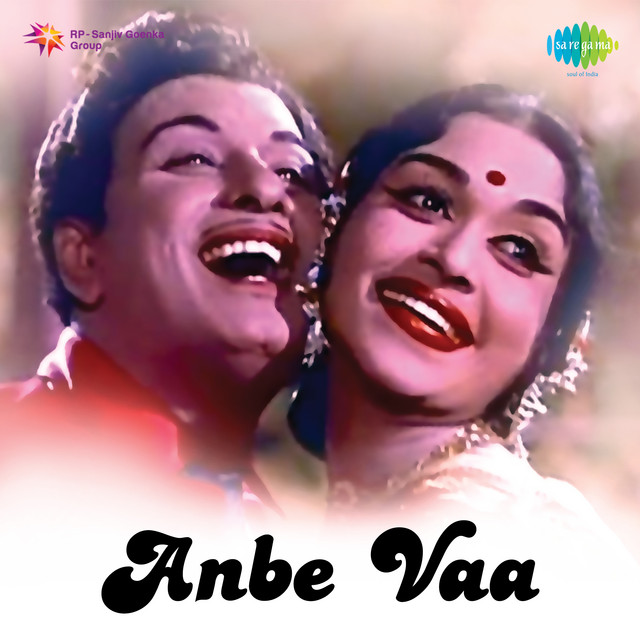
- Anbe Vaa
- Movie release year
- 1966
- Lyrics added on
- 6 May 2019
Lyrics & meaning
Beyond the translation
Overall song meaning
'Anbe Vaa' is an iconic romantic title track from the 1966 classic Tamil film starring M. G. Ramachandran. The protagonist welcomes love into his life, equating the human heart to a sacred temple wherein love manifests as a divine deity. He further compares the vision of his beloved's eyes to a soothing southern breeze blowing through a lush garden. The song expresses pure joy, exhilaration, and romantic devotion through simple yet deeply poetic imagery.
Writing craft
Poetic devices
Metaphor (Uruvakgam)
“Ullam endroru koyililae Dheivam kanden anbae vaa”
The poet directly equates the heart to a temple ('Ullam endroru koyililae') and love/beloved to a deity ('Dheivam kanden').
Metaphor (Uruvakgam)
“Kangal endroru solaiyilae Thendral kanden anbae vaa”
The eyes are metaphorically described as a garden ('Kangal endroru solaiyilae') and the feeling as a cool breeze ('Thendral kanden').
Anaphora / Repetition
“Anbae vaa… vaa”
The refrain 'Anbae vaa' is repeatedly used to build emotional intensity, musical cadence, and joyful welcoming.
Did you know?
Trivia
Anbe Vaa (1966), directed by A. C. Tirulokchandar, was a landmark romantic comedy for M. G. Ramachandran (MGR). The music was composed by M. S. Viswanathan, and the legendary T. M. Soundararajan rendered this vibrant title song penned by Vaali.
Keep listening
Songs with a similar feeling
From the same album
More songs from Anbe Vaa
View albumSpot an issue?
Help us improve the lyrics or English translation.