- Lyricist
- M Saravanan
- Singer
- Sayanora
- Music director
- C. Sathya
- Movie name
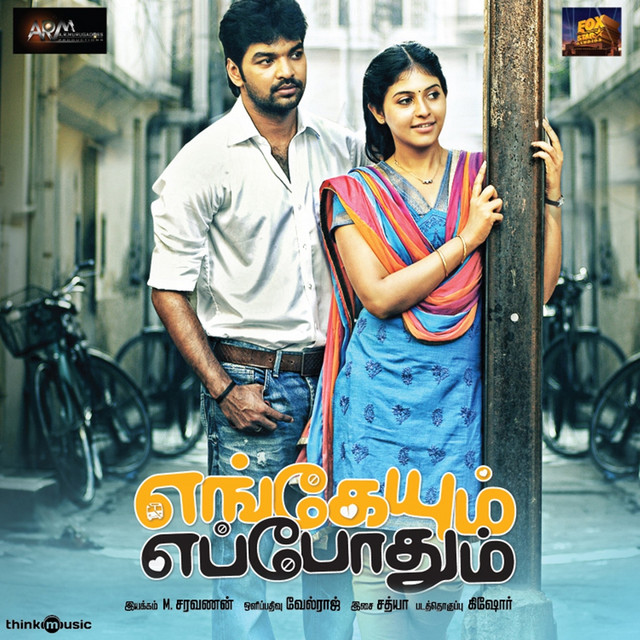
- Engaeyum Eppothum
- Movie release year
- 2011
- Lyrics added on
- 7 Jul 2017
Lyrics & meaning
Beyond the translation
Overall song meaning
This poignant lyric touches upon the brevity, mortality, and fragile nature of human existence. It expresses deep anguish over the loss of life and relationships, emphasizing that no human being has the divine power to conquer death. The song uses classical philosophical imagery to describe the mortal body as a temporary dwelling that ultimately returns to the crematorium ground.
Writing craft
Poetic devices
Metaphor
“Idhu onbathu vaasal veedu”
The body is metaphorically referred to as 'onbathu vaasal veedu' (a house with nine gates/openings), representing the physical human form in Siddha philosophy.
End Rhyme (Iyaibu)
“Idhu onbathu vaasal veedu / Pinbu eesan aalum kaadu”
The line endings 'veedu' and 'kaadu' rhyme, creating a rhythmic contrast between the house of life and the wilderness of death.
Parallelism & Rhyme
“Maranaththai kolla / Irappinai vella”
The lines 'Maranaththai kolla' and 'Irappinai vella' use parallel grammatical structures and rhyming action verbs ('kolla' and 'vella').
Did you know?
Trivia
This tragic theme motif plays during the pivotal bus accident sequences in the 2011 Tamil drama film 'Engaeyum Eppothum', directed by M. Saravanan, with music composed by C. Sathya.
Keep listening
Songs with a similar feeling
From the same album
More songs from Engaeyum Eppothum
View albumSpot an issue?
Help us improve the lyrics or English translation.