Skip to content
Isaimozhi
Lyrics & meaning

Jaya Jaya Srirama

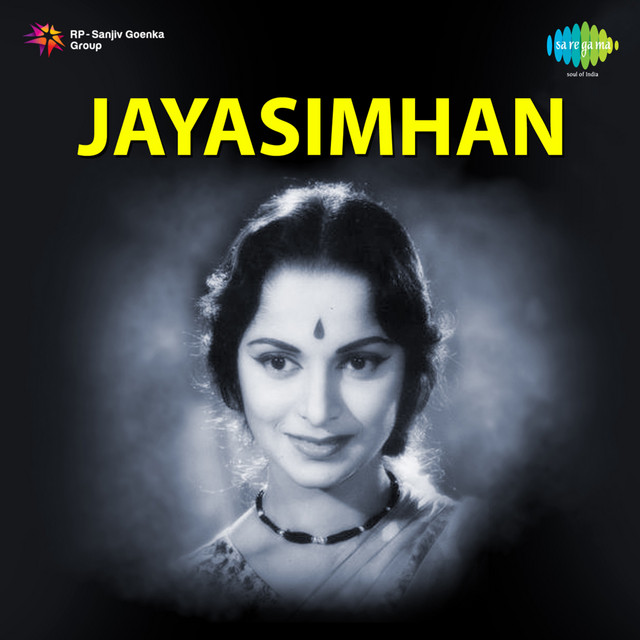
From Jayasimma · 1955

Lyricist
Thanjai N. Ramaiah Dass
Singer
Ghantasala
Music director
T. V. Raju
Details
Jayasimma1955

Lyrics & meaning

Tanglish lyrics English translation
Male
Jaya jaya sreerama raghuvaraVictory, victory to Lord Sri Rama, the best of the Raghu dynasty.
Subhagara sreeramaThe auspicious and blessed Sri Rama.
Jaya jaya sreerama raghuvaraVictory, victory to Lord Sri Rama, the best of the Raghu dynasty.
Subhagara sreeramaThe auspicious and blessed Sri Rama.
Male
Thribhuvana jananayanaabi raamaThe one who pleases the eyes of all beings in the three worlds, Rama.
Jaya jaya sreerama raghuvaraVictory, victory to Lord Sri Rama, the best of the Raghu dynasty.
Subhagara sreeramaThe auspicious and blessed Sri Rama.
Male
Thaaraga naamaOh Lord whose name itself is the liberating 'Taraka Mantra',
Thaaraga naama dhasaradha raamaOh Dasaratha's son Rama, whose name is the liberating 'Taraka Mantra',
Thanujavi raama pattabhi raamaThe radiant prince Rama, the crowned King Pattabhi Rama,
Jaya jaya sreerama raghuvaraVictory, victory to Lord Sri Rama, the best of the Raghu dynasty.
Subhagara sreeramaThe auspicious and blessed Sri Rama.
Male
Haaa…aaa..aaa..aaaHaaa...aaa..aaa..aaa
Raama raghukula jalanidhisomaaRama, who is like the moon rising from the vast ocean of the Raghu dynasty,
Boomi sudhaa kaama…aa…The beloved Lord of Sita, the daughter of the Earth,
Raama raghukula jalanidhisomaaRama, who is like the moon rising from the vast ocean of the Raghu dynasty,
Boomi sudhaa kaama…The beloved Lord of Sita, the daughter of the Earth,
Male
Kaamidha thaayagha karunadhaamaThe bestower of all desires and the supreme abode of mercy,
Komala neela saroja shyamaDark-complexioned and beautiful like a delicate blue lotus,
Male
Jaya jaya sreerama raghuvaraVictory, victory to Lord Sri Rama, the best of the Raghu dynasty.
Subhagara sreeramaThe auspicious and blessed Sri Rama.
Thribhuvana jananayanaabi raamaThe one who pleases the eyes of all beings in the three worlds, Rama.
Jaya jaya sreerama raghuvaraVictory, victory to Lord Sri Rama, the best of the Raghu dynasty.
Subhagara sreeramaThe auspicious and blessed Sri Rama.

Beyond the translation

Song interpretation

This song is a devotional praise dedicated to Lord Rama. The lyrics invoke his various divine attributes, describing him as the jewel of the Raghu dynasty, the beloved son of Dasaratha, and the spouse of Sita (Bhoomi Suta). He is hailed as the embodiment of compassion, who grants all desires and delights the eyes of everyone across the three worlds. Written in highly Sanskritized classical style by Thanjai N. Ramaiah Dass and rendered powerfully by Ghantasala under T. V. Raju's musical composition, the hymn celebrates Rama's cosmic form and auspicious presence, emphasizing the redeeming power of the 'Taraka' name.

Writing craft

Poetic devices

Antyakshari / End Rhyme (Iyaibu)

Jaya jaya sreerama raghuvara / Subhagara sreerama

Multiple lines end with the rhyming suffix 'rama' or 'somaa' / 'dhama' / 'shyama', creating a melodious Sanskritized rhythm throughout the verse.

Metaphor (Rupaka)

Raama raghukula jalanidhisomaa

'Raghukula jalanidhi soma' compares the Raghu dynasty to a vast ocean (jalanidhi) and Rama to the bright moon (soma) born from it.

Simile / Visual Imagery (Upama)

Komala neela saroja shyama

'Komala neela saroja shyama' compares Rama's divine complexioned form to a tender blue lotus blossom.

Repetition / Anaphora (Adukkuthodar)

Jaya jaya sreerama raghuvara

The repetition of 'Jaya jaya' emphasizes intense joy and reverence in praise.

Did you know?

Trivia

This devotional hymn from Jayasimma (1955) is heavily influenced by classical Sanskrit stotras. Sung by legendary singer Ghantasala, the track served as a major highlight in the film starring N. T. Rama Rao, who was iconic for portraying mythological and divine roles in South Indian cinema.

Keep listening

More from Jayasimma