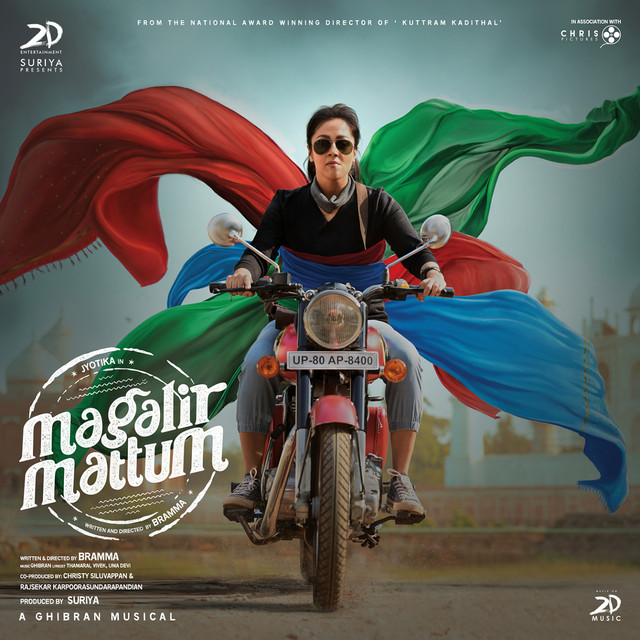
- Lyricist
- Thamarai
- Singers
- Anurag Kulkarni, Padmalatha
- Music director
- Ghibran
- Movie name
- Magalir Mattum
- Movie release year
- 2017
- Lyrics added on
- 11 Mar 2017
Lyrics & meaning
Beyond the translation
Overall song meaning
This song from 'Magalir Mattum' (2017) serves as a rousing feminist anthem that examines the systemic oppression and sacrifices imposed on women across generations. Starting with mythological allusions to Gandhari and Sita—women whose narratives were shaped by sacrifice, blind compliance, and imprisonment—the song transitions into the real-world struggles modern women face. It highlights hardships from female infanticide ('kallipaal') and educational barriers to the erasure of identity after marriage and the unacknowledged labor of homemakers.
Writing craft
Poetic devices
Allusion (Illadhisi Ani)
“Gandhari yaaro kan paaraadha thaaro... Seethaigal yaaro sirai meelaadhadhaaro”
References classical epic characters (Gandhari from Mahabharata and Sita from Ramayana) to illustrate the historic, continuous cycle of women's suffering and societal boundaries.
Monai (First-letter Alliteration)
“Kannae en Kadambari / Kan moodi thoongum kili”
Repetition of the initial consonant 'K' sound across the words in these lines creates a rhythmic and soothing musical flow.
Metaphor (Uruvagam)
“Kaattaaraai maari neeyum / Kaadu medu thaandi vaa vaa”
Compares a woman breaking societal restrictions to a raging wild river ('Kaattaaru') that forcefully carves its path across terrain.
Simile (Uvamai Ani)
“Thamaraiyaagi nindromae”
Compares women rising above life's harsh conditions (stones and thorns) to a lotus flower blossoming beautifully out of muddy waters.
Did you know?
Trivia
Written by female lyricist Thamarai, this song forms a key thematic element in 'Magalir Mattum' (2017), a film directed by Bramma and produced by Suriya's 2D Entertainment. The movie heavily centers on female bonding, empowerment, and independence, starring Jyothika alongside veteran actors Urvashi, Bhanupriya, and Saranya Ponvannan. The musical score for the film was composed by Ghibran.
Keep listening
Songs with a similar feeling
From the same album
More songs from Magalir Mattum
View albumSpot an issue?
Help us improve the lyrics or English translation.