Skip to content
Isaimozhi
Lyrics & meaning

Ellam Inbame

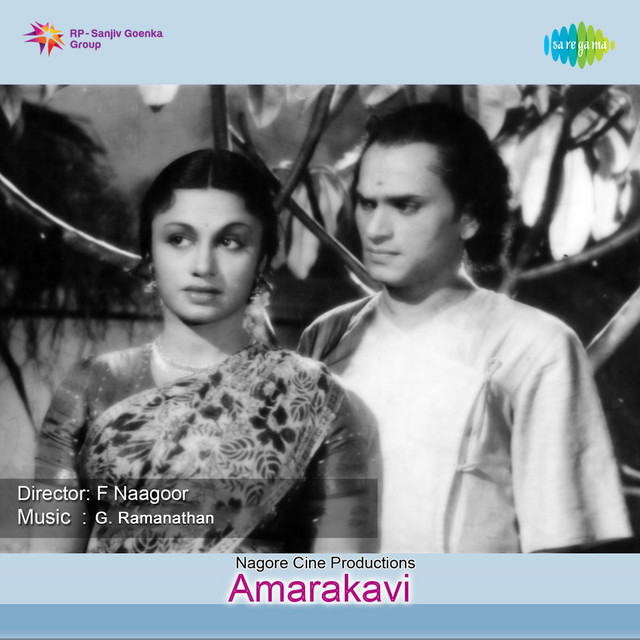
From Amarakavi · 1952

Lyricist
Suratha
Singers
M. K. Thiyagaraja Bagavathar, N. L. Ganasaraswathi
Music director
G. Ramanathan
Details
Amarakavi1952

Lyrics & meaning

Tanglish lyrics English translation
Male
Ellaam inbamae endrumaeEverything is joy forever.
Logam meedhu deiva vaazhvu tharum kalaiArt that grants a divine life upon this world—
Ellaam inbamae endrumaeEverything is joy forever.
Logam meedhu deiva vaazhvu tharum kalaiArt that grants a divine life upon this world—
Ellaam inbamae endrumaeEverything is joy forever.
Male
Neelavaanam thanilae…ye ye ye yeIn the blue sky... ye ye ye ye
Neelavaanam thanilaeIn the blue sky,
Neendhum anna nadai adhanilaeIn the swan-like graceful walk floating within it,
Neelavaanam thanilaeIn the blue sky,
Neendhum anna nadai adhanilaeIn the swan-like graceful walk floating within it,
Nelindhu naagam sellum asaivilaeIn the slithering motion of a serpent,
Thaavi oodum pullimaan vizhiyilaeIn the eyes of a leaping spotted deer,
Per azhagai kandu aanandhamum konduBeholding great beauty and experiencing bliss,
Paesi magizhndhu vaazhum neram ….ellaam inbamaeThe time spent conversing happily... everything is joy.
Male
Vizhiyin puruvam pol valaindha vill yaendhiHolding a bow curved like an eyebrow,
Veeran puriyum poril vettri kaanbadhumWitnessing victory in the battle fought by a hero,
Vizhiyin puruvam pol valaindha vill yaendhiHolding a bow curved like an eyebrow,
Veeran puriyum poril vettri kaanbadhumWitnessing victory in the battle fought by a hero,
Female
Velai pondra vadivulla kundrilOn a spear-shaped hill,
Mayil visiri pol thoghai virithu aaduvadhumA peacock spreading its tail fan-like and dancing,
Male
Kuvindha kai pondra thaamarai arumbilaeIn a lotus bud resembling folded hands,
Female :Meenai thaalattum neela kadalilaeFemale: In the blue sea that lulls the fish to sleep,
Male :Sirppiyin silai thanilaeMale: In a sculptor's carved statue,
Female :Thavayogiyin nilai thanilaeFemale: In the deep posture of an ascetic in penance,
Male :ArivilaeMale: In wisdom,
Female :AzhagilaeFemale: In beauty,
Male
Maanganiyin ullae vandu polae mayangiIntoxicated like a beetle trapped inside a ripe mango,
Female :Kaadhal purivadhum kalaiyaeFemale: Making love is an art,
Kadavul inbam adhuvaeThat is divine bliss itself,
Kaadhal purivadhum kalaiyaeMaking love is an art,
Kadavul inbam adhuvaeThat is divine bliss itself,
Adharkaettra neram idhuvaeAnd this is the most opportune time for it,
Ellaam inbamae endrumaeEverything is joy forever.

Beyond the translation

Song interpretation

This classic duet celebrates the ultimate joy found in art, nature, heroics, and romantic love. The lyrics describe art as a divine gift to the world that turns human existence into a paradise of endless bliss. Nature's marvels—such as swans gliding in the sky, serpents moving smoothly, deer leaping with bright eyes, peacocks dancing on spear-shaped hills, and fish cradled by the sea—are portrayed as expressions of art and sources of delight.

Writing craft

Poetic devices

Simile (Upamai)

Vizhiyin puruvam pol valaindha vill yaendhi

Compares the curve of a warrior's bow to the shape of an eyebrow ('Vizhiyin puruvam pol valaindha vill').

Simile (Upamai)

Kuvindha kai pondra thaamarai arumbilae

Compares the lotus bud to hands folded in prayer or greeting ('Kuvindha kai pondra thaamarai arumbilae').

Initial Rhyme / Alliteration (Monai)

Neelavaanam thanilae

Repetition of the initial sound 'Ne' across consecutive lines ('Neelavaanam', 'Neendhum', 'Nelindhu').

Metaphor (Uruvagam)

Maanganiyin ullae vandu polae mayangi

Describes lovers becoming swooned in romance akin to a beetle intoxicated inside a sweet mango fruit.

Did you know?

Trivia

Amarakavi (1952) was one of the notable films featuring legendary Carnatic vocalist and actor M. K. Thiyagaraja Bhagavathar (MKT) after his release from prison. The lyrics were written by the celebrated modern Tamil poet Suratha, known as 'Uvamai Kavinjar' (The Poet of Similes) for his rich use of poetic comparisons, which is distinctly evident in this song.

Keep listening

More from Amarakavi