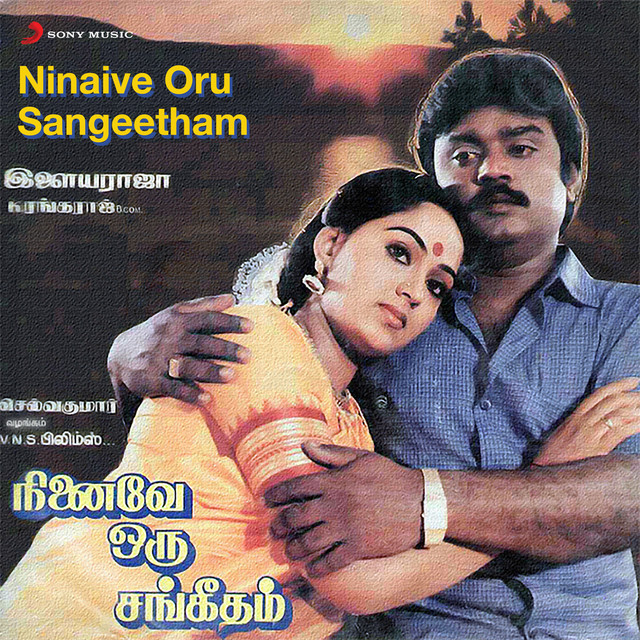
- Lyricist
- Gangai Amaran
- Singer
- S. P. Balasubrahmanyam
- Music director
- Ilayaraja
- Movie name
- Ninaive Oru Sangeetham
- Movie release year
- 1987
- Lyrics added on
- 28 Jun 2022
Lyrics & meaning
Beyond the translation
Overall song meaning
The song 'Eduththu Vachcha Paalum' expresses the deep yearning, romantic frustration, and agony of a husband longing for his beloved wife's presence. Set against the serene backdrop of a moonlit night, he laments how the glass of milk set aside for intimacy and the bed spread out for rest are going to waste in her absence. He fondly recalls nostalgic memories from their past—such as going to the local cinema hall to watch classic M.G. Ramachandran films like 'Nadodi Mannan' and singing songs from 'Thoongadha Thambi'. Through sweet folk metaphors and tender pleas, he confesses his suffering, declaring her to be his very soul while lamenting the fate that keeps them apart.
Writing craft
Poetic devices
Metaphor (உருவகம்)
“En jeevan needhaan un devan naanthaan”
The line directly equates the wife to the speaker's life force ('jeevan') and sweet nectar ('poonthaenae').
Contrast / Visual Imagery (முரண் / காட்சிப்படுத்துதல்)
“Veenaakaththaan poguthu antha velli nilaa kaayuthu”
Juxtaposes the romantic, ideal setting of bright silver moonlight with the tragic waste of unused domestic intimacy (poured milk and spread mat).
Cultural Allusion (திரைப்படக் குறிப்பு)
“Naadodi mannan nee paaththu vantha nammooru theater-ula”
References real-life iconic MGR films ('Nadodi Mannan' and 'Thoongadha Thambi') to ground the couple's shared romantic nostalgia in Tamil pop culture.
Eukai / Rhyme (எதுகை)
“Thoonginaal thaangumaa maman nenjam”
Rhythmic second-letter rhyming typical in Tamil folk lyrics (e.g., 'Thoonginaal' / 'Naan padum').
Did you know?
Trivia
This track features iconic pop-culture references to legendary Tamil actor M. G. Ramachandran's (MGR) blockbuster movies 'Nadodi Mannan' (1958) and 'Thoongadha Thambi' (1956). Gangai Amaran's lyrics seamlessly integrate rustic rural conversational Tamil with nostalgic film references, while Ilaiyaraaja's composition and S. P. Balasubrahmanyam's expressive vocals made it one of the most celebrated solo romantic tracks of 1987.
Keep listening
Songs with a similar feeling
From the same album
More songs from Ninaive Oru Sangeetham
View albumSpot an issue?
Help us improve the lyrics or English translation.