Skip to content
Isaimozhi
Lyrics & meaning

Neeya Pesiyadhu En Anbae

From Thirumalai · 2003

Lyricist
Pa. Vijay
Singer
Shankar Mahadevan
Music director
Vidyasagar
Details
Thirumalai2003

Lyrics & meaning

Tanglish lyrics English translation
Male
Nee enbadhu edhuvarai edhuvaraiHow far does 'you' extend? How far?
Naan enbadhu edhuvarai edhuvaraiHow far does 'I' extend? How far?
Naam enbadhum adhuvarai adhuvaraidhaan'We' exists only up to that boundary.
Vaazhvenbadhu oru murai oru muraiLife comes only once, only once.
Saavenbadhum oru murai oru muraiDeath comes only once, only once.
Kaadhal varum oru murai oru muraidhaanLove happens only once, only once.
Male
Neeya pesiyadhuWas it really you who spoke?
En anbae neeya pesiyadhuMy love, was it really you who spoke?
Theeyai veesiyadhuDid you hurl fire at me?
En anbae theeyai veesiyadhuMy love, did you hurl fire at me?
Kangalilae un kangalilaeIn your eyes, in your eyes,
Poi kaadhal naadagam yenadiWhy this drama of fake love, my dear?
Anbinilae mei anbinilaeIn love, in true love,
Orr oomai kaadhalan naanadiI am a mute lover, my dear.
Male
Neeya pesiyadhu neeya pesiyadhuWas it you who spoke? Was it you who spoke?
Male
Nee enbadhu edhuvarai edhuvaraiHow far does 'you' extend? How far?
Naan enbadhu edhuvarai edhuvaraiHow far does 'I' extend? How far?
Naam enbadhum adhuvarai adhuvaraidhaan'We' exists only up to that boundary.
Vaazhvenbadhu oru murai oru muraiLife comes only once, only once.
Saavenbadhum oru murai oru muraiDeath comes only once, only once.
Kaadhal varum oru murai oru muraidhaanLove happens only once, only once.
Male
Oho yedho naan irundhen en ullae kaatraai nee kidaithaaiOh, I just existed aimlessly, but I found you inside me like air.
Kaatrai mozhi peyarthen anbae soll moochai yen parithaaiI translated that air into words, my love; why did you snatch my breath away?
Iravingae pagal ingae thodu vaanam ponadhu engaeNight is here, day is here, but where did the horizon go?
Udal ingae uyir ingae thadumaarum aavi engaeThe body is here, life is here, but where is my faltering soul?
Uruginen naan uruginen indru uyiril paadhi karuginenI melted, I melted; today, half of my soul is charred.
Male
Oh neeya pesiyadhuOh, was it really you who spoke?
En anbae neeya pesiyadhuMy love, was it really you who spoke?
Male
Veril naan azhudhen en poovum sogam unaravillaiI wept at the roots, but my flower did not sense the sorrow.
Vesham tharikkavillai mun naalil kaadhal pazhakkamillaiI wore no disguise; I had no prior experience in playing games with love.
Unakkendrae uyir konden adhil yedhum maatram illaiI took life only for your sake, there is no change in that.
Pirivendraal uravu undu adhanalae vaattam illaiOnly if a relationship truly exists can there be separation, so I feel no despair.
Maraippadhaal nee maraippadhaalJust because you hide it, just because you hide it,
En kaadhal maaindhu pogumaWill my love perish and die?
Male
Neeya pesiyadhu en anbaeWas it really you who spoke, my love?
Male
Neeya pesiyadhu ..neeya pesiyadhu…Was it you who spoke? Was it you who spoke?

Beyond the translation

Song interpretation

The song 'Neeya Pesiyadhu' portrays the immense heartbreak and disbelief of a lover after hearing harsh, unexpected words from his beloved. He reflects on the singular nature of life, death, and true love, emphasizing that genuine love happens only once. Hurt by her sudden emotional distance and false drama, he struggles to reconcile the cruel words with the person he loved, feeling as though half of his soul has been charred.

Writing craft

Poetic devices

Rhetorical Question

Neeya pesiyadhu / En anbae neeya pesiyadhu

The repeated question 'Neeya pesiyadhu?' (Was it really you who spoke?) highlights disbelief, sorrow, and shock at the beloved's unexpected change of heart.

Metaphor

Veril naan azhudhen en poovum sogam unaravillai

Comparing himself to weeping roots ('Veril naan azhudhen') and her to an unaware flower ('en poovum sogam unaravillai') illustrates deep, unacknowledged, foundational suffering.

Repetition / Anaphora

Vaazhvenbadhu oru murai oru murai / Saavenbadhum oru murai oru murai

The phrase 'oru murai' (once) is repeated to emphasize the absolute uniqueness and irreplaceable nature of life, death, and genuine love.

Antithesis / Contrast

Iravingae pagal ingae thodu vaanam ponadhu engae

Juxtaposing 'Iravu' (night) and 'Pagal' (day), and 'Udal' (body) and 'Uyir' (life), emphasizes total spatial and emotional disorientation.

Did you know?

Trivia

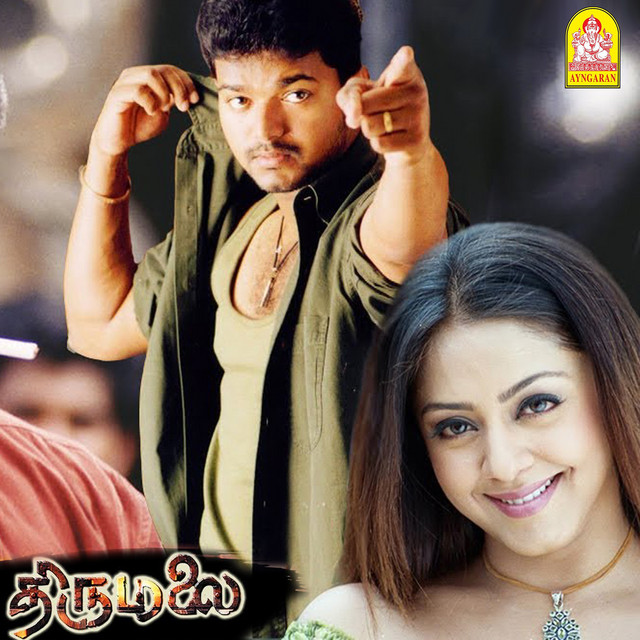
Composed by Vidyasagar and sung by Shankar Mahadevan, this poignant song is featured in the 2003 Tamil hit action-romance film 'Thirumalai', starring Vijay and Jyothika. It marks a critical emotional turning point in the movie's narrative.

Keep listening

More from Thirumalai