Skip to content
Isaimozhi
Lyrics & meaning

Athai Magane Poivarava

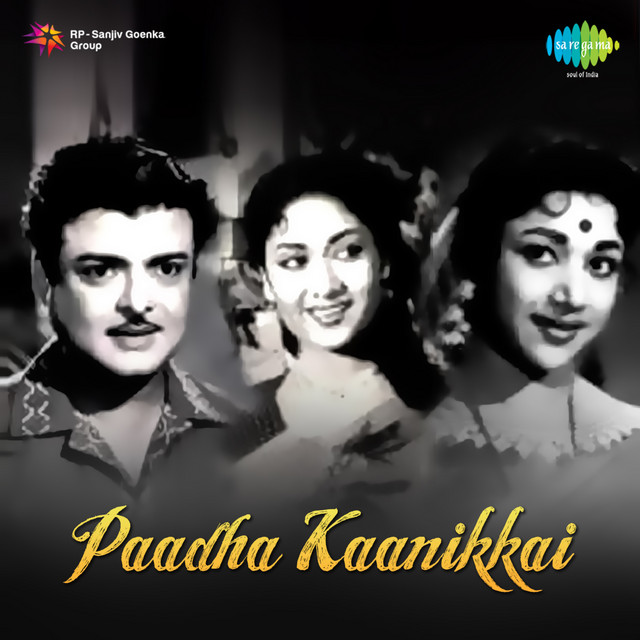
From Paadha Kaanikkai · 1962

Lyricist
Kannadasan
Singer
P. Susheela
Music director
Vishwanathan-Ramamoorthy
Details
Paadha Kaanikkai1962

Lyrics & meaning

Tanglish lyrics English translation
Female
Athai magane poi varavaaCousin, shall I take leave and return?
Ammaan magane poi varavaaCousin, shall I take leave and return?
Female
Athai magane poi varavaaCousin, shall I take leave and return?
Ammaan magane poi varavaaCousin, shall I take leave and return?
Athai magane poi varavaa..aaaCousin, shall I take leave and return?
Female
Undhan manadhai kondu sellavaaShall I take your heart with me as I go?
Endhan ninaivai thandhu sellavaaShall I leave my memories behind with you?
Undhan manadhai kondu sellavaaShall I take your heart with me as I go?
Endhan ninaivai thandhu sellavaaShall I leave my memories behind with you?
Female
Athai magane poi varavaaCousin, shall I take leave and return?
Ammaan magane poi varavaaCousin, shall I take leave and return?
Athai magane poi varavaa..aaaCousin, shall I take leave and return?
Female
Malligai malar soodiAdorned with jasmine flowers,
Kaathu nirkavaaShall I stand and wait for you?
Maalai ilam thendral thannaiSending the gentle evening breeze,
Thoodhu vidavaaAs a messenger to you?
Malligai malar soodiAdorned with jasmine flowers,
Kaathu nirkavaaShall I stand and wait for you?
Maalai ilam thendral thannaiSending the gentle evening breeze,
Thoodhu vidavaaAs a messenger to you?
Nalladhor naal paarthu sedhi sollavaaFinding an auspicious day, shall I send word?
Naatorai saatchi veithu vandhu vidavaaShall I return with the townspeople as witnesses?
Female
Athai magane poi varavaaCousin, shall I take leave and return?
Ammaan magane poi varavaaCousin, shall I take leave and return?
Athai magane poi varavaa..aaaCousin, shall I take leave and return?
Female
Pen paarkum maapilaiLooking at the bridegroom who comes to see the bride,
Mugam paarkavaaShall I look at his face?
Mugam paarka mudiyaamalUnable to look directly at his face,
Nilam paarkavaaShall I look down at the ground shyly?
Pen paarkum maapilaiLooking at the bridegroom who comes to see the bride,
Mugam paarkavaaShall I look at his face?
Mugam paarka mudiyaamalUnable to look directly at his face,
Nilam paarkavaaShall I look down at the ground shyly?
Nilam paarthu medhuvaagaLooking at the ground, slowly,
Unai naadavaaShall I come seeking you?
Nilam paarthu medhuvaagaLooking at the ground, slowly,
Unai naadavaaShall I come seeking you?
Unai naadi unai naadi..Seeking you, seeking you...
Unai naadi unai naadi..uravaadavaaSeeking you, seeking you, shall I bond with you?
Female
Athai magane poi varavaaCousin, shall I take leave and return?
Ammaan magane poi varavaaCousin, shall I take leave and return?
Athai magane poi varavaa..aaaaCousin, shall I take leave and return?

Beyond the translation

Song interpretation

Athai Magane Poi Varavaa from the 1962 Tamil film Paadha Kaanikkai is a tender, classic romantic track penned by Kannadasan, set to music by the legendary duo Viswanathan-Ramamoorthy, and rendered by P. Susheela. The heroine bids a playful and affection-laden farewell to her cross-cousin (her traditional suitor in Tamil culture), asking if she may take his heart along while leaving her own sweet memories behind. She expresses her eager anticipation for their marriage, envisioning how she will adorn herself with jasmine blossoms and send the evening breeze as her romantic messenger. The song highlights classical Tamil courtship customs, depicting the heroine's coy modesty (Naanam) as she imagines looking down at the ground when he officially arrives to see her as a prospective bride, longing to unite with him in matrimony before the townspeople.

Writing craft

Poetic devices

Ethukai (Second-letter Rhyme)

Undhan manadhai kondu sellavaa / Endhan ninaivai thandhu sellavaa

The second consonant sound matches across adjacent lines ('Undhan' and 'Endhan'), creating a smooth rhythmic flow characteristic of traditional Tamil poetry.

Personification / Thoodhu

Maalai ilam thendral thannai / Thoodhu vidavaa

The evening breeze ('Maalai ilam thendral') is personified as an envoy or messenger (Thoodhu) carrying romantic messages between lovers.

Adukkuthodar (Repetition for Emphasis)

Unai naadi unai naadi..uravaadavaa

The phrase 'Unai naadi' is repeated continuously to intensify the expression of deep love, longing, and singular dedication.

Cultural Metaphor of Naanam (Modesty)

Mugam paarka mudiyaamal / Nilam paarkavaa

Gazing down at the earth ('Nilam paarkavaa') serves as an iconic literary metaphor for female modesty and shyness in Tamil culture when facing one's suitor.

Did you know?

Trivia

In Tamil culture, 'Poi Varavaa' literally translates to 'I will go and return', as saying a direct 'goodbye' or 'go' is traditionally considered inauspicious. The song beautifully reinforces the cross-cousin marriage tradition (Athai magan / Ammaan magan) prevalent in Tamil Nadu, captured with emotional perfection by Kannadasan's lyricism and Viswanathan-Ramamoorthy's composition.

Keep listening

More from Paadha Kaanikkai