Skip to content
Isaimozhi
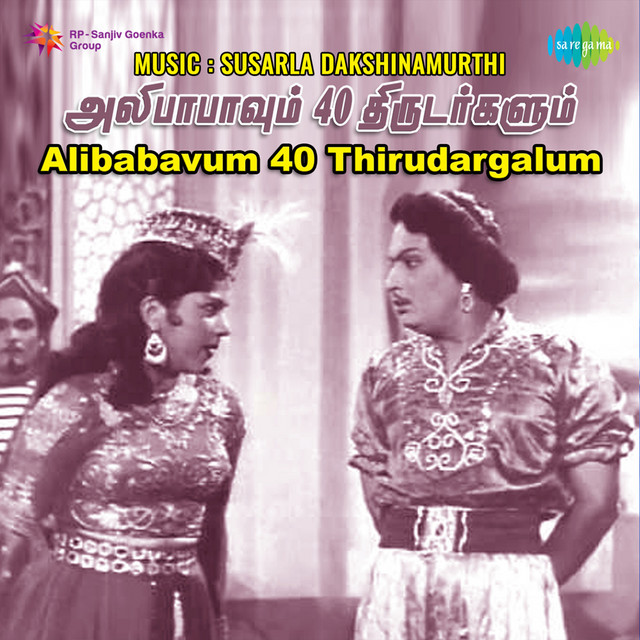
Alibabavum 40 Thirudargalum album cover
Lyrics & meaning

Anbinaale Aalavandha

From Alibabavum 40 Thirudargalum · 1956

Lyricist
A. Maruthakasi
Singer
Bhanumathi Ramakrishna
Music director
Susarla Dakshinamurthi
Movie name
Alibabavum 40 Thirudargalum
Movie release year
1956
Lyrics added on
25 Feb 2020

Lyrics & meaning

♫ Tanglish lyrics
↻ English translation
Un selvathai kandadhaal
Jindhaabaadh koori
Seviyaara vaazhthugindraar
Un ullatthai kandadhaal u
Uir kaadhal konda naan
Urugiyae vaazhthugindren
Anbinaalae aala vandha
Azhagu boopathi
Ennai anbinaalae aala vandha
Azhagu boopathi
Ameer boopathi o ameer boopathi
En inba vaazhkai thaerin saarathi
Ennai anbinaalae aala vandha
Azhagu boopathi
Ennai anbinaalae aala vandha
Azhagu boopathi
Ameer boopathi o ameer boopathi
En inba vaazhkai thaerin saarathi
Sindhai thannai kavarndhu konda
Seedhakkaadhiyae
Dhraatchai pola inikka pesum
Jeeva jothiyae
Sindhai thannai kavarndhu konda
Seedhakkaadhiyae
Dhraatchai pola inikka pesum
Jeeva jothiyae
Singaara rooba maaranae
En vaazhvin paadhiyae
Singaara rooba maaranae
En vaazhvin paadhiyae
Ameer boopathi o ameer boopathi
En inba vaazhkai thaerin saarathi
Ennai anbinaalae aala vandha
Azhagu boopathi
Ennai anbinaalae aala vandha
Azhagu boopathi
Ameer boopathi o ameer boopathi
En inba vaazhkai thaerin saarathi
Iru dhuruvam namadhu vaazhvu
Indha ulagilae
Irandum ondraai saerndhadhinaal
Inba nilaiyilae
Iru dhuruvam namadhu vaazhvu
Indha ulagilae
Irandum ondraai saerndhadhinaal
Inba nilaiyilae
En idhaya vaanil pudhimaiyaana
Oliyum veesudhae
En idhaya vaanil pudhimaiyaana
Oliyum veesudhae
Ameer boopathi o ameer boopathi
En inba vaazhkai thaerin saarathi
Ennai anbinaalae aala vandha
Azhagu boopathi
Ennai anbinaalae aala vandha
Azhagu boopathi
Ameer boopathi o ameer boopathi
En inba vaazhkai thaerin saarathi
Seeing your wealth,
shouting cheers of praise,
they fill your ears with blessings.
Seeing your true heart,
loving you with all my soul,
I bless you with a melting heart.
You who came to rule with love,
handsome king,
You who came to rule me with love,
handsome king,
Lord Amir, oh Lord Amir,
the charioteer of my joyful life!
You who came to rule me with love,
handsome king,
You who came to rule me with love,
handsome king,
Lord Amir, oh Lord Amir,
the charioteer of my joyful life!
You who captivated my heart and thoughts,
my generous Seethakkathi (noble benefactor),
who speaks words as sweet as grapes,
the glowing light of my soul!
You who captivated my heart and thoughts,
my generous Seethakkathi (noble benefactor),
who speaks words as sweet as grapes,
the glowing light of my soul!
Charming god of love,
the other half of my life,
Charming god of love,
the other half of my life,
Lord Amir, oh Lord Amir,
the charioteer of my joyful life!
You who came to rule me with love,
handsome king,
You who came to rule me with love,
handsome king,
Lord Amir, oh Lord Amir,
the charioteer of my joyful life!
Our lives were two opposite poles
in this world,
but as the two unite as one
in a state of sweet joy,
Our lives were two opposite poles
in this world,
but as the two unite as one
in a state of sweet joy,
across the sky of my heart,
a wondrous new light shines!
across the sky of my heart,
a wondrous new light shines!
Lord Amir, oh Lord Amir,
the charioteer of my joyful life!
You who came to rule me with love,
handsome king,
You who came to rule me with love,
handsome king,
Lord Amir, oh Lord Amir,
the charioteer of my joyful life!
Female
Female
Female
Female
Female
Female
Female
Female
Female

Beyond the translation

Overall song meaning

This classic romantic duet celebrates profound love, devotion, and soul connection. The heroine contrasts the world's surface-level admiration for her beloved's material wealth with her own deeper adoration for his generous heart. She praises him as her ideal leader, comparing his noble character to the legendary patron Seethakkathi and his sweetness to grapes. She reflects on how their lives, despite starting as two opposite poles in the world, have harmoniously united to create complete bliss. This union illuminates her heart like a new dawn, guiding her life forward as he assumes the role of the charioteer of her happiness.

Writing craft

Poetic devices

Simile (Uvamai)

Dhraatchai pola inikka pesum

Compares the sweet, pleasant speech of the beloved to the sweetness of grapes ('Dhraatchai pola').

Metaphor (Uruvagam)

En inba vaazhkai thaerin saarathi

Directly equates the beloved to a charioteer who guides the chariot of her blissful life.

Metaphor (Uruvagam)

En idhaya vaanil pudhimaiyaana

Refers to the inner emotional space as 'the sky of my heart' (idhaya vaanil).

Anaphora / Initial Rhyme (Monai)

Iru dhuruvam namadhu vaazhvu / Indha ulagilae

Repetition of the vowel sound 'I' at the beginning of consecutive lines ('Iru', 'Indha', 'Irandum', 'Inba').

Did you know?

Trivia

Alibabavum 40 Thirudargalum (1956), directed and produced by T. R. Sundaram, holds a landmark place in Tamil cinema history as the first full-length Gevacolor feature film in South India. Starring M. G. Ramachandran and P. Bhanumathi, the film featured iconic music composed by S. Dakshinamurthi.

Keep listening

Songs with a similar feeling

From the same album

More songs from Alibabavum 40 Thirudargalum

View album

Spot an issue?

Help us improve the lyrics or English translation.