- Lyricist
- Vaali
- Singer
- S. Janaki
- Music director
- Ilayaraja
- Movie name
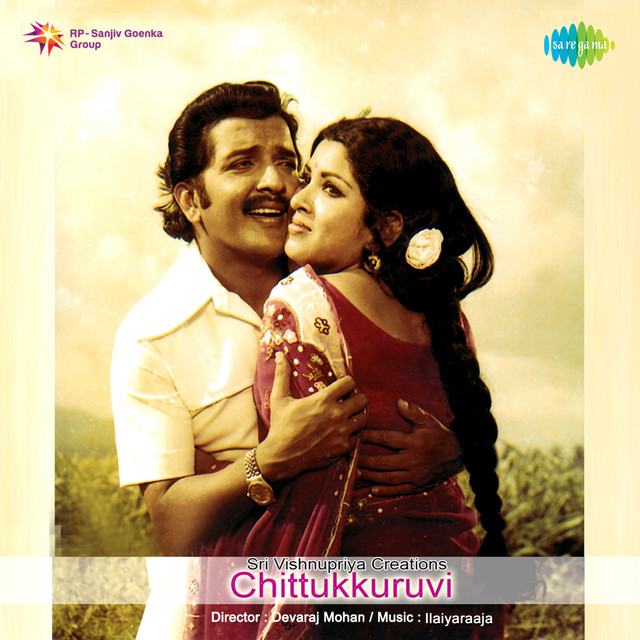
- Chittu Kuruvi
- Movie release year
- 1978
- Lyrics added on
- 14 Nov 2018
Lyrics & meaning
Beyond the translation
Overall song meaning
Adadada Maamara Kiliyae from the 1978 film Chittu Kuruvi is a romantic duet expressing the deep affection and eager anticipation between two lovers. Using vibrant rural imagery and everyday metaphors—such as comparing each other to parrots in mango trees, sweet pomegranates, and delicate lotus vines—the lovers convey how consumed they are by thoughts of one another. The song highlights traditional wedding preparations, such as applying turmeric, exchanging betel leaves, and fixing betrothal gifts, encapsulating the joy and longing of young love.
Writing craft
Poetic devices
Metaphor (உருவகம் - Uruvagam)
“Adadada maamara kiliyae”
The speaker addresses the beloved using terms of endearment like 'Maamara kili' (parrot on a mango tree), 'Maadhulam kani' (pomegranate fruit), and 'Thaamara kodi' (lotus vine).
Hyperbole (உயர்வு நவிற்சி - Uyarvu Navirchi)
“Rendu naala unnai enni / Pachcha thanni kudikkalayae”
Exaggerating the depth of romantic longing by claiming to go without drinking water for two days due to thoughts of the beloved.
Visual Imagery (காட்சிப் படிமம்)
“Kan valaiya potten”
Poetic imagery of casting a net using eyes ('Kan valai') to catch the loved one, contrasting with physical tools like fishing hooks and water pots.
Aetukai / Rhyme (எதுகை)
“Meena pudikka thoondil irukku / Neera pudikka thondi irukku”
Matching second consonants across lines ('Meena' / 'Neera') creating rhythmic harmony.
Did you know?
Trivia
This iconic song from 'Chittu Kuruvi' (1978) was composed by Maestro Ilaiyaraaja, rendered by S. P. Balasubrahmanyam and P. Susheela, with lyrics written by Vaali. The movie stars Sivakumar and Sumithra in the lead roles.
Keep listening
Songs with a similar feeling
From the same album
More songs from Chittu Kuruvi
View albumSpot an issue?
Help us improve the lyrics or English translation.