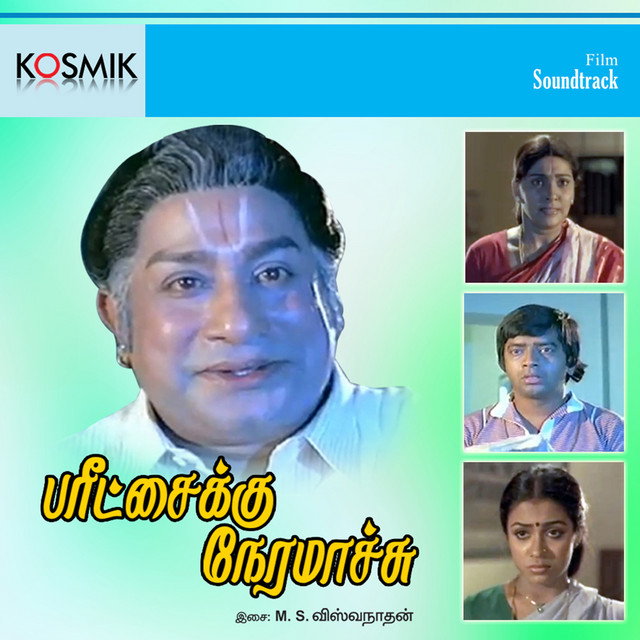
Ragam Thaalam Pallavi
From Paritchaikku Neramachu · 1982
- Lyricist
- Vaali
- Singer
- T. M. Soundararajan
- Music director
- M. S. Vishwanathan
- Details
- Paritchaikku Neramachu1982
Lyrics & meaning
| ♫ Tanglish lyrics | ↻ English translation |
|---|---|
| Male | |
| …………… | Music consists of three elements: melody (raagam), rhythm (thaalam), and thematic core (pallavi) |
| Male | |
| Raagam thaalam pallavi endru geedham moondru vagai | Music consists of three elements: melody (raagam), rhythm (thaalam), and thematic core (pallavi) |
| Raagam thaalam pallavi endru geedham moondru vagai | When these three come together and emerge |
| Intha moondrum saernthu thondrum pothu | A shower of musical sound pours forth, a shower of expressive sound speaks forth |
| Pozhiyum naadha mazhai mozhiyum naadha mazhai | A shower of musical sound pours forth... aa... aa... aa... aa... aa... |
| Pozhiyum naadha mazhai…..aa….aa….aa….aa….aa…. | She plays the ruby-encrusted veena |
| Male | |
| Maanikka veenaiyai meettugiraal | The divine goddess known as Kalaivaani (Saraswati) |
| Kalaivaani enum dheivam | She plays the ruby-encrusted veena |
| Maanikka veenaiyai meettugiraal | The divine goddess known as Kalaivaani (Saraswati) |
| Kalaivaani enum dheivam | She reveals that her divine offering |
| Aval kaanikkai thaanendru kaattugiraal | Is the priceless wealth of musical knowledge |
| Isai nyaanam enum selvam | She plays the ruby-encrusted veena |
| Male | |
| Maanikka veenaiyai meettugiraal | The divine goddess known as Kalaivaani (Saraswati) |
| Kalaivaani enum dheivam | The goddess of music smiles, she smiles |
| Male | |
| Sangeetha devathai sirikkindraal sirikkindraal | The goddess of music smiles |
| Sangeetha devathai sirikkindraal | Through the path of the seven musical notes |
| Saptha swarangalin vazhiyaaga | She composes and grants fine lyrical literature |
| Nalla saagithyam varainthu kodukkindraal | In the form of colorful, classical Tamil language |
| Vanna senthamizh mozhiyaaga | In the form of colorful, classical Tamil language |
| Vanna senthamizh mozhiyaaga | She plays the ruby-encrusted veena |
| Male | |
| Maanikka veenaiyai meettugiraal | The divine goddess known as Kalaivaani (Saraswati) |
| Kalaivaani enum dheivam | |
.........................
Music consists of three elements: melody (raagam), rhythm (thaalam), and thematic core (pallavi)
ராகம் தாளம் பல்லவி என்று கீதம் மூன்று வகை
இந்த மூன்றும் சேர்ந்து தோன்றும் போது
பொழியும் நாத மழை பொழியும் நாத மழை
பொழியும் நாத மழை.......ஆஅ....ஆ....ஆ.....ஆ.......
Music consists of three elements: melody (raagam), rhythm (thaalam), and thematic core (pallavi)
When these three come together and emerge
A shower of musical sound pours forth, a shower of expressive sound speaks forth
A shower of musical sound pours forth... aa... aa... aa... aa... aa...
She plays the ruby-encrusted veena
மாணிக்க வீணையை மீட்டுகிறாள்
கலைவாணி எனும் தெய்வம்
மாணிக்க வீணையை மீட்டுகிறாள்
கலைவாணி எனும் தெய்வம்
அவள் காணிக்கை தானென்று காட்டுகிறாள்
இசை ஞானம் எனும் செல்வம்....
The divine goddess known as Kalaivaani (Saraswati)
She plays the ruby-encrusted veena
The divine goddess known as Kalaivaani (Saraswati)
She reveals that her divine offering
Is the priceless wealth of musical knowledge
She plays the ruby-encrusted veena
மாணிக்க வீணையை மீட்டுகிறாள்
கலைவாணி எனும் தெய்வம்
The divine goddess known as Kalaivaani (Saraswati)
The goddess of music smiles, she smiles
சங்கீத தேவதை சிரிக்கின்றாள் சிரிக்கின்றாள்......
சங்கீத தேவதை சிரிக்கின்றாள்
ஸப்த ஸ்வரங்களின் வழியாக
நல்ல சாகித்யம் வரைந்து கொடுக்கின்றாள்
வண்ண செந்தமிழ் மொழியாக.....
The goddess of music smiles
Through the path of the seven musical notes
She composes and grants fine lyrical literature
In the form of colorful, classical Tamil language
She plays the ruby-encrusted veena
மாணிக்க வீணையை மீட்டுகிறாள்
கலைவாணி எனும் தெய்வம்
The divine goddess known as Kalaivaani (Saraswati)
……………
Music consists of three elements: melody (raagam), rhythm (thaalam), and thematic core (pallavi)
Raagam thaalam pallavi endru geedham moondru vagai
Music consists of three elements: melody (raagam), rhythm (thaalam), and thematic core (pallavi)
Raagam thaalam pallavi endru geedham moondru vagai
When these three come together and emerge
Intha moondrum saernthu thondrum pothu
A shower of musical sound pours forth, a shower of expressive sound speaks forth
Pozhiyum naadha mazhai mozhiyum naadha mazhai
A shower of musical sound pours forth... aa... aa... aa... aa... aa...
Pozhiyum naadha mazhai…..aa….aa….aa….aa….aa….
She plays the ruby-encrusted veena
Maanikka veenaiyai meettugiraal
The divine goddess known as Kalaivaani (Saraswati)
Kalaivaani enum dheivam
She plays the ruby-encrusted veena
Maanikka veenaiyai meettugiraal
The divine goddess known as Kalaivaani (Saraswati)
Kalaivaani enum dheivam
She reveals that her divine offering
Aval kaanikkai thaanendru kaattugiraal
Is the priceless wealth of musical knowledge
Isai nyaanam enum selvam
She plays the ruby-encrusted veena
Maanikka veenaiyai meettugiraal
The divine goddess known as Kalaivaani (Saraswati)
Kalaivaani enum dheivam
The goddess of music smiles, she smiles
Sangeetha devathai sirikkindraal sirikkindraal
The goddess of music smiles
Sangeetha devathai sirikkindraal
Through the path of the seven musical notes
Saptha swarangalin vazhiyaaga
She composes and grants fine lyrical literature
Nalla saagithyam varainthu kodukkindraal
In the form of colorful, classical Tamil language
Vanna senthamizh mozhiyaaga
In the form of colorful, classical Tamil language
Vanna senthamizh mozhiyaaga
She plays the ruby-encrusted veena
Maanikka veenaiyai meettugiraal
The divine goddess known as Kalaivaani (Saraswati)
Kalaivaani enum dheivam
Beyond the translation
Song interpretation
This classical-based song is a devotional homage to Goddess Kalaivaani (Saraswati), praising her as the source of all artistic and musical inspiration. It explains how music comes to life through the unison of raagam (melody), thaalam (rhythm), and pallavi (theme), creating a refreshing rain of divine sound that cleanses and elevates the soul. The lyrics portray Saraswati strumming her gem-studded veena, bestowing musical knowledge as a precious gift. Through the seven swaras (notes) and the exquisite Tamil language, she creates beautiful compositions, smiling upon humanity with grace and artistic wisdom.
Writing craft
Poetic devices
Metaphor (Uruvagam)
“Isai nyaanam enum selvam”
Compares musical knowledge (isai nyaanam) to tangible wealth (selvam).
Metaphor (Uruvagam)
“Pozhiyum naadha mazhai mozhiyum naadha mazhai”
Compares the flow of divine music to a shower of rain (naadha mazhai).
Rhyme / Ezhuthu Onriyatuthal (Etugai)
“Pozhiyum naadha mazhai mozhiyum naadha mazhai”
Internal rhyme using the second letter 'zhi' in 'Pozhiyum' and 'Mozhiyum'.
Visual and Auditory Imagery
“Maanikka veenaiyai meettugiraal Kalaivaani enum dheivam”
Paints a vivid picture of Saraswati strumming a gem-studded veena, evoking both visual splendor and melodious music.
Alliteration (Monaai)
“Saptha swarangalin vazhiyaaga Nalla saagithyam varainthu kodukkindraal”
Repetition of the 'S' sound in 'Saptha swarangalin' and 'saagithyam' creates rhythmic harmony.
Did you know?
Trivia
Paritchaikku Neramachu (1982) is a drama film directed by Muktha Srinivasan, starring Sivaji Ganesan and Y. G. Mahendran. Composed by legendary maestro M. S. Viswanathan with lyrics by Vaali, this song is a fine example of integrating classical Carnatic aesthetics into Tamil film music, soulfully rendered by P. Jayachandran.
Keep listening
More from Paritchaikku Neramachu
Paritchaikku Neramachu