- Lyricist
- Suratha
- Singer
- T. R. Rajakumari
- Music director
- G. Ramanathan
- Movie name
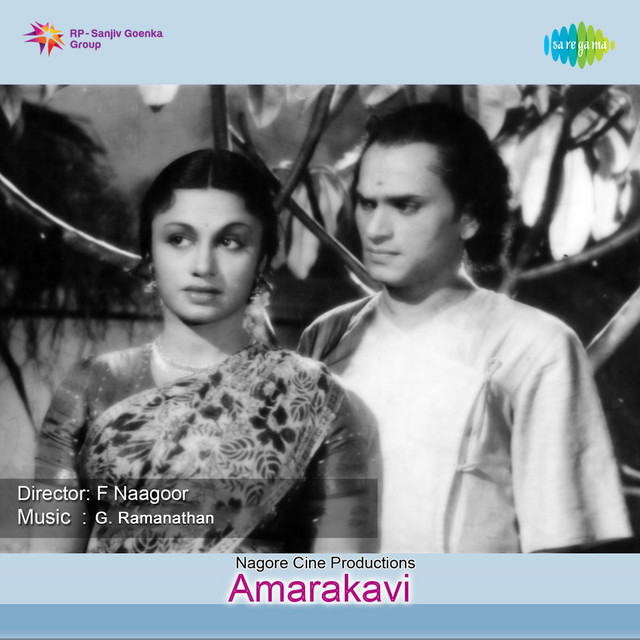
- Amarakavi
- Movie release year
- 1952
- Lyrics added on
- 30 Jul 2025
Lyrics & meaning
Beyond the translation
Overall song meaning
This poignant song expresses extreme despair, helplessness, and the sorrow of poverty. The female protagonist laments her dire plight of suffering from severe hunger and being reduced to begging for survival. She reflects on the painful social reality and burdens of being a woman in distress, concluding that worldly desires are entirely futile. In her deepest despair, she turns her devotion toward the divine, recognizing God as her sole remaining shelter and companion.
Writing craft
Poetic devices
Anaphora / Repetition (Adukkuthodar)
“Aasai ellaam veenae”
The phrase 'Aasai ellaam veenae' is repeated sequentially to forcefully emphasize despair, disappointment, and the utter futility of worldly hopes.
Monai (Initial Alliteration)
“Inaiyae illaa iraivaa / Inimael unnai allaamal”
Matching initial vowel sound 'I' across consecutive lines (Inaiyae / Inimael), enhancing the rhythmic flow of the prayer.
Pathos (Karuna Rasa)
“Penn jenmam vaedhanaiyae”
Use of evocative terms such as 'nondhenae' (tormented), 'vaedhanaiyae' (agony), and 'kadhiyae' (fate) to evoke a deep mood of sorrow and pathos.
Did you know?
Trivia
The 1952 film Amarakavi was a major release starring M. K. Thyagaraja Bhagavathar and T. R. Rajakumari. Lyricist Suratha, renowned for his rich metaphors and pure Tamil phrasing, penned this soul-stirring track composed by legendary music director G. Ramanathan.
Keep listening
Songs with a similar feeling
From the same album
More songs from Amarakavi
View albumSpot an issue?
Help us improve the lyrics or English translation.