Skip to content
Isaimozhi
Lyrics & meaning

Navaraathiri Subha Raathiri

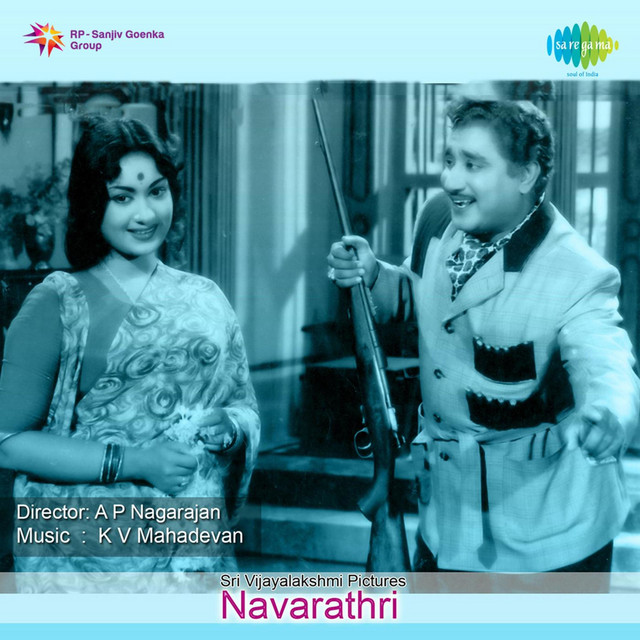
From Navarathri · 1964

Lyricist
Kannadasan
Singer
P. Susheela
Music director
K. V. Mahadevan
Details
Navarathri1964

Lyrics & meaning

Tanglish lyrics English translation
Female
Navaraathiri suba raathiriNavaratri is an auspicious night
Alai magalum kalai magalumThe Goddess of Wealth and the Goddess of Learning
Koluvirukkum raathiriAre seated in court on this night
Alai magalum kalai magalumThe Goddess of Wealth and the Goddess of Learning
Koluvirukkum raathiriAre seated in court on this night
Malai magalum saerndhu nammaiThe Goddess of the Mountains also joins them
Maghizha vaikkum raathiriTo make us rejoice on this night
Malai magalum saerndhu nammaiThe Goddess of the Mountains also joins them
Maghizha vaikkum raathiriTo make us rejoice on this night
Female
Navaraathiri suba raathiriNavaratri is an auspicious night
Female
Kavinjar nenjil karpanaigalImaginations in a poet's heart
Ooruvadhum raathiriWell up during the night
Kavinjar nenjil karpanaigalImaginations in a poet's heart
Ooruvadhum raathiriWell up during the night
Kalainjarellaam arangathilaeAll the artists on the stage
Saeruvadhum raathiriGather together during the night
Kalainjarellaam arangathilaeAll the artists on the stage
Saeruvadhum raathiriGather together during the night
Female
Naal mudindhu thodangum idamThe point where a day ends and begins
Nadu raathiriIs midnight
Ila nangaiyargal pottruvadhumAnd what young maidens celebrate
NavaraathiriIs Navaratri
Naal mudindhu thodangum idamThe point where a day ends and begins
Nadu raathiriIs midnight
Ila nangaiyargal pottruvadhumAnd what young maidens celebrate
NavaraathiriIs Navaratri
Female
Navaraathiri suba raathiriNavaratri is an auspicious night
Female
Thookkamillaa manidharaiyumEven people suffering from sleeplessness
Thoonga vaikkum raathiriAre put to peaceful sleep by this night
Thookkamillaa manidharaiyumEven people suffering from sleeplessness
Thoonga vaikkum raathiriAre put to peaceful sleep by this night
Suzhandru varum boomikkendrumTo the spinning, revolving Earth
Amaidhi tharum raathiriIt is the night that grants peace
Suzhandru varum boomikkendrumTo the spinning, revolving Earth
Amaidhi tharum raathiriIt is the night that grants peace
Female
Kaalaiyarkku oriravu sivaraatthiriFor young men, Shivaratri is just a single night
Aanaal kanniyarkku onbadhu naal navaraathiriBut for young maidens, Navaratri is nine nights long
Kaalaiyarkku oriravu sivaraatthiriFor young men, Shivaratri is just a single night
Aanaal kanniyarkku onbadhu naal navaraathiriBut for young maidens, Navaratri is nine nights long
Female
Navaraathiri suba raathiriNavaratri is an auspicious night

Beyond the translation

Song interpretation

Navaaraathiri Suba Raathiri from the 1964 Tamil film Navarathri is a celebratory song praising the holy festival of Navaratri. Written by lyricist Kannadasan, the song honors the divine feminine trinity—Lakshmi (Alai Magal), Saraswati (Kalai Magal), and Parvati (Malai Magal)—who bring wealth, wisdom, and strength into the lives of devotees during these sacred nights. The lyricist highlights night as a time of artistic creation, poetic inspiration, and universal peace that comforts even the restless, culminating in a playful comparison between the single night of Shivaratri observed by young men and the nine-night festival cherished by young women.

Writing craft

Poetic devices

Iyaibu (End Rhyme)

Navaraathiri suba raathiri

The repetition of 'raathiri' at the end of consecutive lines creates a rhythmic and melodic refrain throughout the song.

Metaphor / Epithets

Alai magalum kalai magalum

Kannadasan uses traditional mythological epithets: 'Alai magal' (Ocean's daughter / Lakshmi), 'Kalai magal' (Arts' daughter / Saraswati), and 'Malai magal' (Mountain's daughter / Parvati).

Monai (Alliteration)

Kavinjar nenjil karpanaigal

Repetition of the initial 'Ka' sound across words in the line for poetic rhythm.

Juxtaposition / Antithesis

Kaalaiyarkku oriravu sivaraatthiri / Aanaal kanniyarkku onbadhu naal navaraathiri

Contrasts one night of Shivaratri dedicated to young men with the nine-night celebration of Navaratri meant for young women.

Did you know?

Trivia

Navarathri (1964) is famous for Sivaji Ganesan portraying nine distinct characters representing the Navarasas (nine emotional expressions), matching the nine nights of the festival. Although listed as 'Unknown' in the prompt context, the music for the film was composed by K. V. Mahadevan and this song was sung by P. Susheela.

Keep listening

More from Navarathri