- Lyricist
- Vaali
- Singer
- M. S. Rajeswari
- Music director
- M. S. Vishwanathan
- Movie name
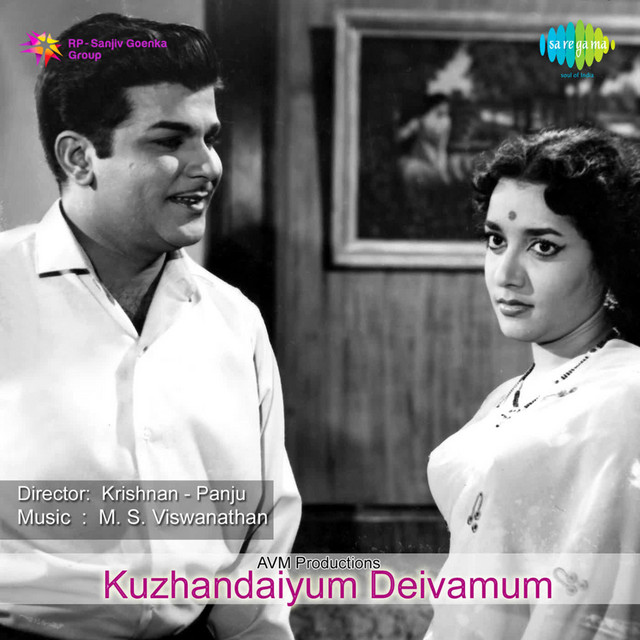
- Kuzhandaiyum Deivamum
- Movie release year
- 1965
- Lyrics added on
- 11 Apr 2017
Lyrics & meaning
Beyond the translation
Overall song meaning
Kozhi Oru Koottilae from the 1965 Tamil classic Kuzhandaiyum Deivamum is an emotionally charged song sung from the perspective of twin sisters caught in the crossfire of their parents' separation. Using innocent yet profound imagery from nature—such as calves running to their mothers and birds feeding their hatchlings—the children question why human parents separate when even animals stay together to nurture their offspring. Addressing their grandfather, the twins mourn their broken home and express their deep yearning for parental affection. They contrast their unfortunate plight with other children who enjoy the love of both parents. Ultimately, they capture their utter helplessness in a poignant line: they are too young to reunite their parents, while the elders lack the heart to do so.
Writing craft
Poetic devices
Metaphor (Uvamai)
“Kozhi oru koottilae / Saeval oru koottilae / Kozhi kunju rendum ippo / Anbillaadha kaattilae”
Compares the mother and father to a hen and rooster living in separate coops, and the young twin sisters to lost chicks stranded in an 'unloving forest'.
Contrast (Ethirpaadu)
“Engalukkum vayasillae / Ungalukkum manasillae”
Contrasts the children's lack of age and authority ('vayasillae') with the adults' lack of empathy and heart ('manasillae').
Rhyme / Monai & Edhukai
“Thaathaa theriyumaa / Paarthaa puriyumaa”
Uses matching internal rhyming and rhythmic endings to heighten emotional resonance in a simple, childlike tone.
Did you know?
Trivia
Kuzhandaiyum Deivamum (1965) was directed by the acclaimed duo Krishnan-Panju and featured child actor Kutty Padmini in a iconic dual role as twin sisters. The song's music was composed by M. S. Viswanathan, with lyrics by Vaali, and was sung by M. S. Rajeswari. The film was an adaptation of Erich Kästner's German novel Lottie and Lisa (and Disney's 1961 film The Parent Trap), and was later remade in Hindi as Do Kaliyaan (1968).
Keep listening
Songs with a similar feeling
From the same album
More songs from Kuzhandaiyum Deivamum
View albumSpot an issue?
Help us improve the lyrics or English translation.