- Lyricist
- Papanasam Sivan
- Singer
- P. Bhanumathi
- Music directors
- G. Ramanathan, C. R. Subbaraman
- Movie name
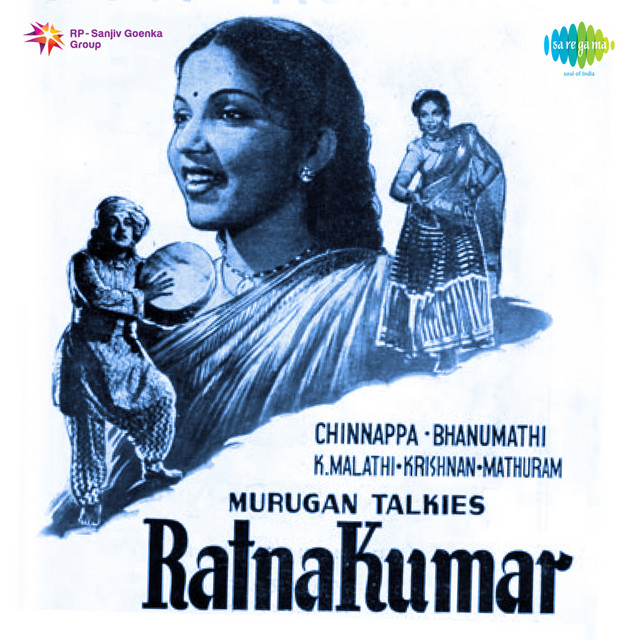
- Rathna Kumar
- Movie release year
- 1949
- Lyrics added on
- 29 May 2020
Lyrics & meaning
Beyond the translation
Overall song meaning
This devotional song praises Goddess Parvati (Amba), celebrating her supreme divinity and maternal grace. The speaker describes how even Saraswati (Kalaimagal) and Lakshmi (Alaimagal) worship her from either side. It highlights the supreme fortune of Himavan, the King of Mountains, who was blessed to rock the infant Goddess in a cradle and enjoy her divine infant speech. The song transitions into a passionate plea for protection, hailing the Goddess as the dispenser of ultimate joy and the savior who dispels the grief of devout believers. Recognizing one's own innocence and ignorance, the devotee surrenders completely at her sacred feet, seeking her refuge and enduring grace.
Writing craft
Poetic devices
Edhugai (Second-letter Rhyme)
“Kalaimaadhum alaimaadhum irupuramum”
The second consonant 'la' matches in 'Kalaimaadhum' and 'alaimaadhum', creating a melodic Tamil poetic rhythm.
Metaphor (Uruvagam)
“Ullam aanandha vellam alaimodha”
The joy within the heart is metaphorically described as a surging flood ('aanandha vellam').
Metaphor (Uruvagam)
“Unn mazhalai amudham unda”
Childish babble/speech is metaphorically described as divine nectar ('mazhalai amudham').
Anaphora (Repetition for Emphasis)
“Inbam koduppaval nee”
The line 'Inbam koduppaval nee' is repeated to emphasize the joyful nature of the divine Mother.
Did you know?
Trivia
'Rathna Kumar' (1949) was a classical Tamil cinematic drama starring P. U. Chinnappa and M. G. Ramachandran. The lyrics were penned by the famed composer and lyricist Papanasam Sivan, known as Tamil music's 'Tamil Tyagayya' for his deep devotional Carnatic compositions.
Keep listening
Songs with a similar feeling
From the same album
More songs from Rathna Kumar
View albumSpot an issue?
Help us improve the lyrics or English translation.