- Lyricist
- Kannadasan
- Singers
- A. M. Rajah, S. Janaki
- Music director
- A. M. Rajah
- Movie name
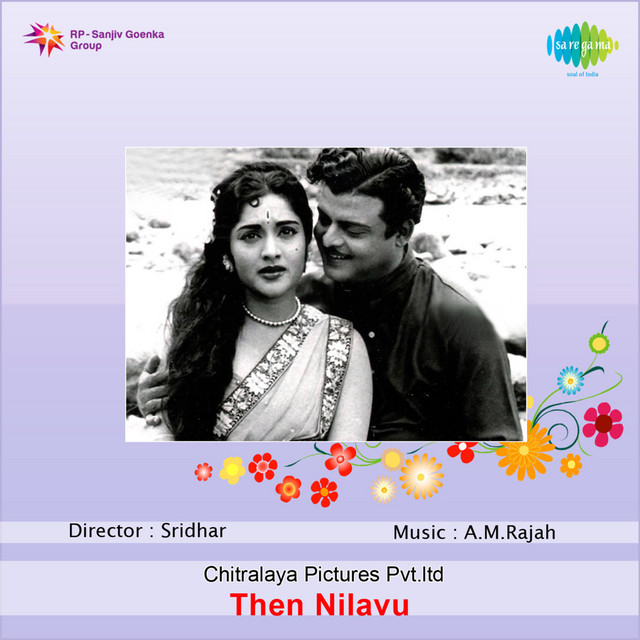
- Then Nilavu
- Movie release year
- 1961
- Lyrics added on
- 10 May 2017
Lyrics & meaning
Beyond the translation
Overall song meaning
Kaalaiyum Neeyae is a classic romantic melody from the movie Then Nilavu (1961), penned by Kannadasan. The song expresses the omnipresence of the beloved in the eyes of the lover. The protagonist envisions his beloved in every aspect of nature and time—the morning, the evening, the gentle breeze, and the vast ocean—as well as in divine experiences like the resonant chime of temple bells and grace personified. Kannadasan uses rich imagery, comparing the perfection of the beloved's youth and beauty to delicious fruits fallen into rich milk. The heart is visualized as a theater stage where the beloved enters to enact a divine and auspicious play of love.
Writing craft
Poetic devices
Anaphora (Repetition)
“Kaalaiyum Neeyae maalaiyum Neeyae kaatrum Neeyae kadalum neeyae”
The word 'Neeyae' (You alone / You are) is repeatedly emphasized throughout the song to signify that the beloved encompasses every form and sensation.
Simile (Upamai)
“Paalil vizhuntha pazhangalai polae paruvam uruvam nirainthaval neeyae”
The beloved's complete beauty and youth are compared to sweet fruits dropped into milk using the comparative marker 'polae' (like).
Metaphor (Uruvagam)
“Manadhil medai amaithaval neeyae mangala naadagam aada vanthaayae”
The human mind/heart is metaphorically called a stage ('medai') where an auspicious play ('mangala naadagam') of romance is enacted.
Alliteration & Rhyme (Monai and Ethukai)
“Kaalaiyum Neeyae maalaiyum Neeyae kaatrum Neeyae kadalum neeyae”
Rhythmic Tamil poetic elements are used with matching initial and second sounds across time and nature concepts (Kaalaiyum, Maalaiyum, Kaatrum, Kadalum).
Did you know?
Trivia
Then Nilavu (1961), directed by C. V. Sridhar, was one of the earliest South Indian films to be extensively shot on location in Jammu & Kashmir. The film marked singer A. M. Rajah's acclaimed work as a music director, featuring hit duets alongside P. Susheela.
Keep listening
Songs with a similar feeling
From the same album
More songs from Then Nilavu
View albumSpot an issue?
Help us improve the lyrics or English translation.