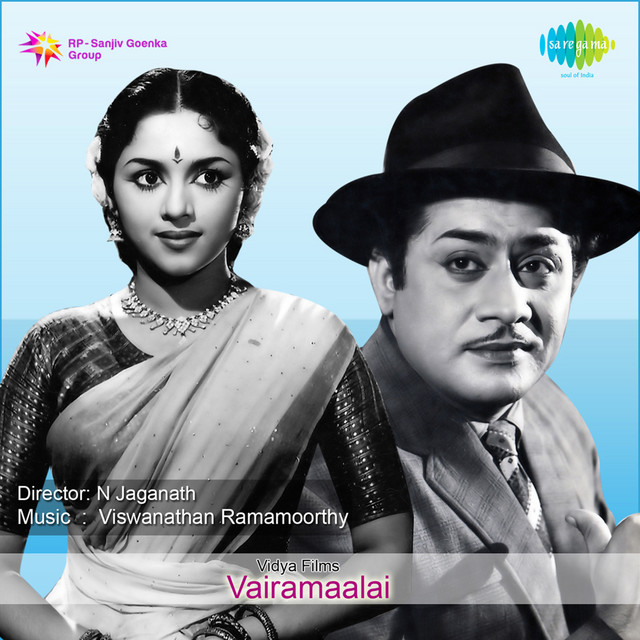
- Lyricist
- Kannadasan
- Singer
- A. P. Komala
- Music director
- Vishwanathan-Ramamoorthy
- Movie name
- Vairamalai
- Movie release year
- 1954
- Lyrics added on
- 7 Dec 2025
Lyrics & meaning
Beyond the translation
Overall song meaning
This progressive song from the 1954 film Vairamalai, written by lyricist Kannadasan, addresses societal conservative skepticism regarding co-education. It directly counters the old proverb that placing men and women together is like placing 'cotton near fire.' Kannadasan redefines educated women as strong as 'iron' rather than fragile cotton, emphasizing that education instills moral discipline, self-respect, and maturity. The lyricist highlights that in an educational setting, male and female students view each other with pure, sibling-like affection (brother and sister). Ultimately, the song portrays men and women as two complementary eyes of society, asserting that joint education fosters mutual respect, removes deceit, and creates a harmonious world.
Writing craft
Poetic devices
Metaphor (Uruvagaimai)
“Iru kangal enbomae”
Comparing men and women to 'two eyes' (Iru kangal), signifying that both are equally indispensable for complete vision and societal progress.
Analogy / Contrast (Uvamai)
“Aanaal paditha pengal panju illengha / Pakka irumbunga”
Contrasting the conservative analogy of cotton and fire (Panjum theeyum) with educated women being strong like solid iron (Pakka irumbunga).
Traditional Enumeration (Sollani)
“Naanam acham madam payirppu / Naal vaghai gunamungha”
Listing the four classical virtues ascribed to women in Tamil tradition (Naanam, Acham, Madam, Payirppu) to build a foundation for moral character.
Simile (Uvamai)
“Arugae valar thanghai / Arugae valar annan”
Comparing the female peer in an educational institution to a younger sister (Thanghai) and the male peer to an elder brother (Annan).
Did you know?
Trivia
Vairamalai (1954) featured music composed by the legendary duo Viswanathan–Ramamoorthy and lyrics written by Kannadasan. Recorded during an era when co-education was a subject of heated debate in Tamil Nadu, this song served as a prominent piece of social commentary promoting female literacy and progressive gender parity in educational institutions.
Keep listening
Songs with a similar feeling
From the same album
More songs from Vairamalai
View albumSpot an issue?
Help us improve the lyrics or English translation.