- Lyricist
- Kannadasan
- Singer
- P. Susheela
- Music director
- Vishwanathan-Ramamoorthy
- Movie name
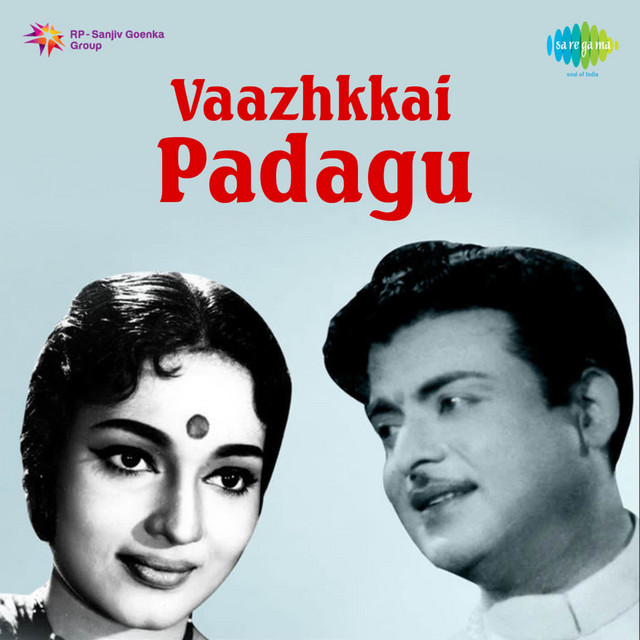
- Vaazhkai Padagu
- Movie release year
- 1965
- Lyrics added on
- 15 Jul 2019
Lyrics & meaning
Beyond the translation
Overall song meaning
Unnai Thaan Naan Ariven is a classic Tamil song from the 1965 movie Vaazhkai Padagu, written by Kaviyarasu Kannadasan. The heroine expresses her total devotion to her beloved, reflecting on how their love was orchestrated by destiny rather than societal approval or human advice. The heart is depicted as a palace where only the beloved is granted entry. In the second stanza, Kannadasan uses a brilliant sequence of logical arguments to challenge societal moral judgment against love. He poses that if love is a sin, then the eyes that see must be sinful, womanhood itself must be sinful, and ultimately the king's mother would also be branded a sinner. Through this philosophical chain of reasoning, the song exalts love as a natural, pure, and indispensable truth of life.
Writing craft
Poetic devices
Metaphor (Uruvagam)
“En ullam ennum maaligaiyil”
Compares the speaker's heart directly to a majestic palace ('ullam ennum maaligai').
Chain Argument / Anadiplosis (Sorporul Pinvarunilai Ani)
“Kaadhalithal paabam endraal... Kangalae paabam endraal... Penmaiyae paabam endraal”
Sequentially links the ending concept of one line to the starting premise of the next to build a logical philosophical argument ('kaadhalithal paabam' -> 'kangalum paabam' -> 'penmaiyae paabam').
Rhetorical Question (Vinaa Ani)
“Penmaiyae paabam endraal / Mannavarin thaai yaaro”
Asks a profound question with a self-evident answer to dismantle moralistic opposition to love.
Initial Rhyme / Alliteration (Monai)
“Yaaridathil kettu vandhom / Yaar solli kaadhal kondom”
Repetition of initial sounds or words across consecutive lines for rhythmic harmony ('Yaaridathil' / 'Yaar solli').
Did you know?
Trivia
Vaazhkai Padagu (1965) starred Gemini Ganesan and Devika, and was a remake of the 1964 Hindi film Zindagi. The music was composed by the legendary duo Viswanathan–Ramamoorthy, and this song was rendered by P. Susheela.
Keep listening
Songs with a similar feeling
From the same album
More songs from Vaazhkai Padagu
View albumSpot an issue?
Help us improve the lyrics or English translation.