Skip to content
Isaimozhi
Lyrics & meaning

Paramasivan Kazhuthil

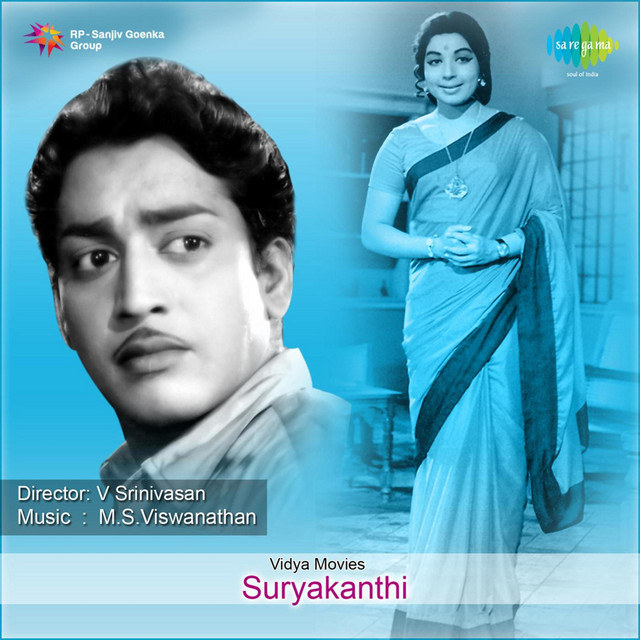
From Suryaganthi · 1973

Lyricist
Kannadasan
Singer
T. M. Soundararajan
Music director
M. S. Vishwanathan
Details
Suryaganthi1973

Lyrics & meaning

Tanglish lyrics English translation
Male
Paramasivan kazhuththil irunthu paambu kettathuFrom Lord Shiva's neck, the snake asked,
Karuda sowkkiyamaa"Garuda, are you doing well?"
Paramasivan kazhuththil irunthu paambu kettathuFrom Lord Shiva's neck, the snake asked,
Karuda sowkkiyamaa"Garuda, are you doing well?"
Yaarum irukkum idaththil irunthu kondaalIf anyone remains in their rightful, safe position,
Elaam sowkkiyamae…karudan sonnathu"All will be well," said Garuda.
Adhil arththam ullathuThere is deep meaning in that.
Male
Uyarntha idaththil irukkum pothuWhen you are in an elevated position,
Ulagam unnai mathikkumThe world will respect you.
Un nilamai konjam irangi vanthaalIf your status drops even a little,
Nizhalum kooda mithikkumEven your own shadow will trample you.
Male
Uyarntha idaththil irukkum pothuWhen you are in an elevated position,
Ulagam unnai mathikkumThe world will respect you.
Un nilamai konjam irangi vanthaalIf your status drops even a little,
Nizhalum kooda mithikkumEven your own shadow will trample you.
Male
Mathiyaathaar thalaivaasal mithikkaathae endru"Do not step onto the doorstep of those who do not respect you,"
Manamulla manithanukku avvai sonnathuSo said saint Avvaiyar to a man of self-respect.
Adhu avvai sonnathuThat is what Avvai said,
Adhil arththam sonnathuAnd she explained the meaning within it.
Adhu avvai sonnathuThat is what Avvai said,
Adhil arththam sonnathuAnd she explained the meaning within it.
Male
Paramasivan kazhuththil irunthu paambu kettathuFrom Lord Shiva's neck, the snake asked,
Karuda sowkkiyamaa"Garuda, are you doing well?"
Yaarum irukkum idaththil irunthu kondaalIf anyone remains in their rightful, safe position,
Elaam sowkkiyamae…karudan sonnathu"All will be well," said Garuda.
Adhil arththam ullathuThere is deep meaning in that.
Male
Vandi oda sakkarangalFor a cart to run, wheels—
Irandu mattum vendumOnly two are required.
Antha irandil ondru siriyathendraalIf one of those two is smaller than the other,
Entha vandi odumWhich cart can possibly move?
Male
Unai polae alavoduJust like that, with proper proportions,
Uravaada vendumOne must build relationships.
Uyarnthorum thaazhnthorumWhen the high-placed and the low-placed,
Uravu kolvathuForm a close relationship,
Adhu sirumai enbathuIt brings disgrace.
Adhil artham ullathuThere is meaning in that.
Male
Paramasivan kazhuththil irunthu paambu kettathuFrom Lord Shiva's neck, the snake asked,
Karuda sowkkiyamaa"Garuda, are you doing well?"
Yaarum irukkum idaththil irunthu kondaalIf anyone remains in their rightful, safe position,
Elaam sowkkiyamae…karudan sonnathu"All will be well," said Garuda.
Adhil arththam ullathuThere is deep meaning in that.
Male
Neeyum naanum saernthirunthomYou and I were united together,
Nilavu vaanam polaeLike the moon and the sky.
Vaan nilavu pola thaeinthuLike the moon in the sky, I waned away,
Vanthaen nee valarnthathaalaeBecause you grew brighter and larger.
Male
Neeyum naanum saernthirunthomYou and I were united together,
Nilavu vaanam polaeLike the moon and the sky.
Vaan nilavu pola thaeinthuLike the moon in the sky, I waned away,
Vanthaen nee valarnthathaalaeBecause you grew brighter and larger.
Male
En ullam enai paarththuWhen my own heart looks at me,
Keli seiyum pothuAnd mocks my state,
Illaathaan ilvaazhvil nimmathi yaedhuWhere is the peace in family life for a man without wealth?
Idhu kanavan sonnathuThis is what a husband said,
Idhil artham ullathuAnd there is meaning in this.
Male
Paramasivan kazhuththil irunthu paambu kettathuFrom Lord Shiva's neck, the snake asked,
Karuda sowkkiyamaa"Garuda, are you doing well?"
Yaarum irukkum idaththil irunthu kondaalIf anyone remains in their rightful, safe position,
Elaam sowkkiyamae…karudan sonnathu"All will be well," said Garuda.
Adhil arththam ullathuThere is deep meaning in that.

Beyond the translation

Song interpretation

Paramasivan Kazhuthil Irunthu is a classic philosophical song from the 1973 film Suryaganthi, composed by M. S. Viswanathan and written by the legendary poet Kannadasan. The song addresses human ego, social status, self-respect, and the delicate balance required in marital relationships. Through a parable involving a snake on Shiva's neck mocking Garuda the eagle, Kannadasan illustrates how respect is often tied to one's elevated position or powerful shelter rather than individual merit. In the context of the film, the song reflects the protagonist's struggles with feelings of inadequacy when his wife's career and earnings surpass his own. Using metaphors such as uneven cartwheels and the waning moon, the song expresses the husband's loss of peace and dignity. Kannadasan weaves classical wisdom from ancient Tamil poet Avvaiyar alongside modern relationship dynamics, creating a timeless musical commentary on human nature and self-worth.

Writing craft

Poetic devices

Allegory / Parable (Uvamaanam)

Paramasivan kazhuththil irunthu paambu kettathu / Karuda sowkkiyamaa

The dialogue between the snake and Garuda serves as a political and social allegory showing how weak individuals feel invincible when protected by powerful positions or patrons.

Analogy (Uvamai)

Antha irandil ondru siriyathendraal / Entha vandi odum

Marriage and social equality are compared to two wheels of a cart; if one wheel is smaller than the other, the cart cannot move smoothly.

Simile (Uvamai)

Nilavu vaanam polae / Vaan nilavu pola thaeinthu

The relationship between husband and wife is compared to the sky and the moon, where one partner's expansion causes the other to feel diminished like a waning moon.

Monai (Initial Alliteration)

Mathiyaathaar thalaivaasal mithikkaathae endru / Manamulla manithanukku

Repetition of the starting letter 'Ma' across words to create poetic rhythm.

Did you know?

Trivia

The opening fable of the snake protected by Lord Shiva's neck asking Garuda about his well-being became an iconic political quote in Tamil Nadu. It is frequently cited by politicians and speakers to illustrate how temporary power or authority grants false confidence to subordinates.

Keep listening

More from Suryaganthi