- Lyricist
- Kumbakudi Kulathur Iyer
- Singers
- K. J. Yesudas, Chorus
- Music director
- G. Devarajan
- Movie name
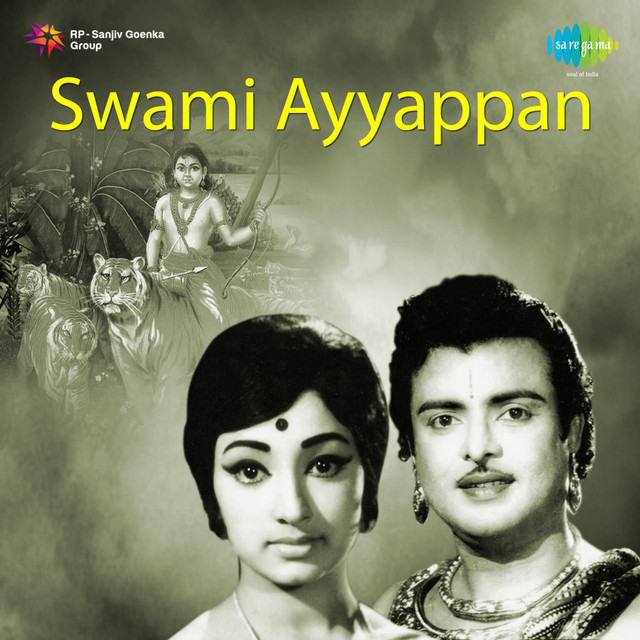
- Swami Ayyappan
- Movie release year
- 1975
- Lyrics added on
- 9 Jul 2020
Lyrics & meaning
Beyond the translation
Overall song meaning
'Harivarasanam' (also known as Hariharatmaja Ashtakam) is a revered devotional hymn dedicated to Lord Ayyappan (Hariharaatmaja), who was born of the divine union between Lord Vishnu (in his Mohini form) and Lord Shiva. The song systematically extols the deity's cosmic charm, benevolent nature, divine weapons/mounts, and compassionate protection offered to devotees who surrender to Him with pure hearts.
Writing craft
Poetic devices
Refrain / Iyaipu (End Rhyme)
“Hariharaatmajam dhevamashrayae”
The line 'Hariharaatmajam dhevamashrayae' serves as a rhythmic refrain repeated at the end of every quatrain to reinforce total surrender.
Monai (Initial Alliteration)
“Shrithajanapriyam chinthithapradham / Sruthivibhooshanam saadhujeevanam / Sruthimanoharam geethalaalasam”
Repetition of the 'Shri/Sru' sound at the beginning of adjacent phrases creates a soothing, hypnotic auditory cadence.
Imagery / Metaphor
“Arunabaasuram boothanaayakam”
Compares the Lord's brilliant aura to 'Aruna' (the radiant rising sun), visually symbolizing the awakening of spiritual wisdom.
Did you know?
Trivia
'Harivarasanam' was composed by Kumbakudi Kulathur Iyer in 1948 and became immortalized after being featured in the 1975 film 'Swami Ayyappan'. Tuned by G. Devarajan and sung by the legendary K. J. Yesudas, this rendered version is famously played every night as the official lullaby (Urapattu) at the Sabarimala Ayyappan Temple before the sanctum sanctorum doors are closed.
Keep listening
Songs with a similar feeling
From the same album
More songs from Swami Ayyappan
View albumSpot an issue?
Help us improve the lyrics or English translation.