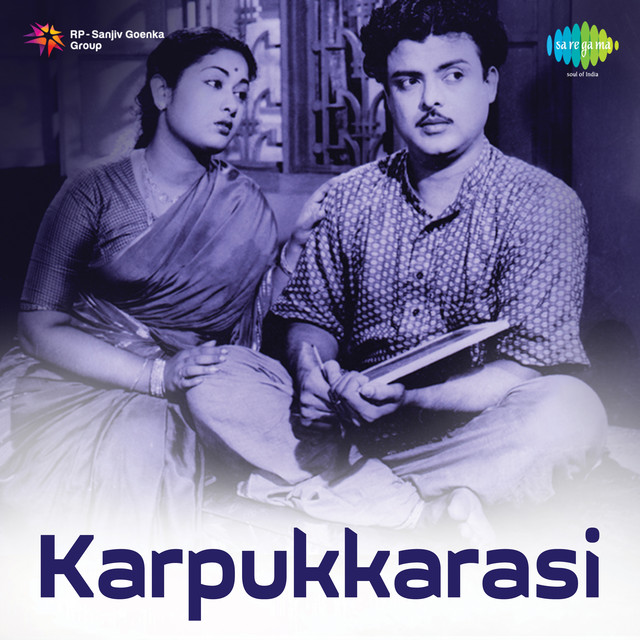
- Lyricist
- Pattukkottai Kalyanasundram
- Singers
- K. Jamunarani, Chorus
- Music director
- G. Ramanathan
- Movie name
- Karpukkarasi
- Movie release year
- 1957
- Lyrics added on
- 25 Nov 2025
Lyrics & meaning
Beyond the translation
Overall song meaning
This song from 'Karpukkarasi' (1957) is a tender lullaby and song of praise filled with maternal affection and high aspirations for a child. The singer lovingly compares the child to sweet honey, a painted sky, and a precious gem, while playfully asking what her tiny clenched fists are reaching out to find.
Writing craft
Poetic devices
Metaphor (Uruvam)
“Ooridum thenae ooviya vaanae”
The child is directly addressed as 'ooridum thenae' (flowing honey) and 'ooviya vaanae' (artistic sky), endearingly equating her to natural beauty.
Simile (Uwamai)
“Kaveri polae kaashini melae”
The explicit comparison word 'polae' (like) compares the child's future nourishing presence on earth to the life-giving River Kaveri.
Initial Alliteration (Monai)
“Kaveri polae kaashini melae / Kaaviya noolae nee valarnthaalae”
The repetition of the initial 'Kaa' sound ('Kaveri' and 'Kaaviya') creates a rhythmic phonetic harmony across lines.
Did you know?
Trivia
Written by the famed poet Pattukkottai Kalyanasundaram, this song subtly injects progressive ideas by wishing that a female child grows up strong and heroic enough to 'rule the world at the tip of a sword', going beyond typical passive lullaby tropes of the 1950s.
Keep listening
Songs with a similar feeling
From the same album
More songs from Karpukkarasi
View albumSpot an issue?
Help us improve the lyrics or English translation.