Skip to content
Isaimozhi
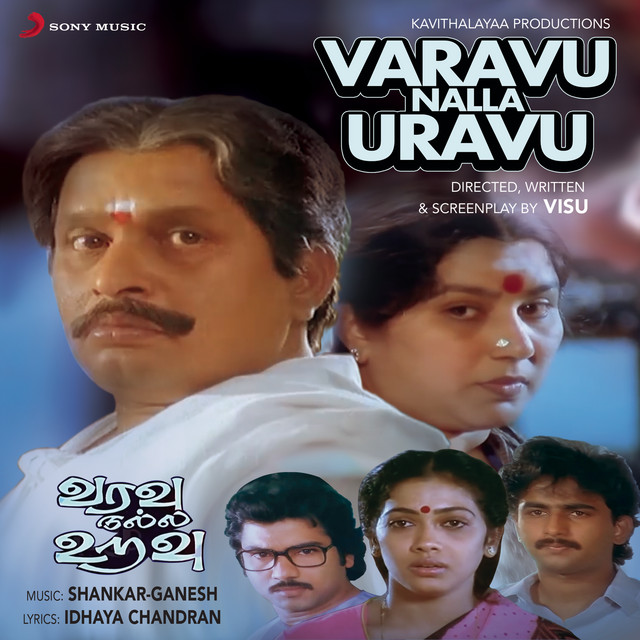
Varavu Nalla Uravu album cover
Lyrics & meaning

Pondatti Oru Paadhi

From Varavu Nalla Uravu · 1990

Lyricist
Idhaya Chandran
Singer
Malaysia Vasudevan
Music director
Shankar Ganesh
Movie name
Varavu Nalla Uravu
Movie release year
1990
Lyrics added on
9 Jul 2020

Lyrics & meaning

♫ Tanglish lyrics
↻ English translation
Pondatti oru paadhi
Pullainga maru paadhi
Santhosam thadumaaruthae
Samsaaram perusaagi sonthangal varumpothu
Thanmaanam pari poguthae sanniyaasam uruvaaguthae
Pondatti oru paadhi
Pullainga maru paadhi
Santhosam thadumaaruthae
Samsaaram perusaagi sonthangal varumpothu
Thanmaanam pari poguthae sanniyaasam uruvaaguthae
Paalootti valarththaalum
Seeraatti paarththaalum
Pullainga paambuthaan saami
Koththaama pogamaa yaemi
Yaezhu kundala vaadaa meerae seppandi
Thuttoda ellam poyaachchu
Thundoda naanum ninaachchu
Adiyoda adichchittaan mottai
Angange theriyuthe sottai…..
Pondatti oru paadhi
Pullainga maru paadhi
Santhosam thadumaaruthae
Samsaaram perusaagi sonthangal varumpothu
Thanmaanam pari poguthae sanniyaasam uruvaaguthae
Poo vaangi koduththaalum
Halwa-vaa kuvichchaalum
Ammaakkal pullai pakkamthaan
Appaakkala road-ttu pakkamthaan
Pondattiyaala naanthaane
Thindaadi devadaasaa aanen
Kettathum puththi vanthaachchu
Ippo naan puththan aayaachchu
Puththam saranam kachchaami
Sangam saranam kachchaami
Dharmam saranam kachchaami…..
Sangara sangaraa sambo
Kamatchi sirichchaachhu ippo naan ambo
Sangara sangaraa sambo
Kamatchi sirichchaachu
Ippo naan ambo ippo naan ambo
Sangara sangara sambo
My wife takes one half,
the kids take the other half,
and my happiness stumbles away.
When the family grows big and relatives swarm in,
my self-respect is stripped away, and I am driven to become a monk.
My wife takes one half,
the kids take the other half,
and my happiness stumbles away.
When the family grows big and relatives swarm in,
my self-respect is stripped away, and I am driven to become a monk.
Even if you feed them milk and raise them,
even if you pamper them with all your love,
children are just venomous snakes, my Lord!
Will they ever leave without striking? Tell me!
Oh Lord of the Seven Hills, you tell me!
Everything is gone along with my money,
and I am left standing in just a single towel!
They shaved my head clean and ruined me completely,
and bald patches are showing up everywhere...
My wife takes one half,
the kids take the other half,
and my happiness stumbles away.
When the family grows big and relatives swarm in,
my self-respect is stripped away, and I am driven to become a monk.
Even if I buy her flowers,
even if I heap her with sweet treats,
mothers will always side with the children,
while fathers are thrown out onto the streets!
It is only because of my wife
that I suffered and became a tragic Devadas!
After losing everything, wisdom has finally struck,
and now I have become an enlightened Buddha!
I take refuge in the Buddha,
I take refuge in the monastic order,
I take refuge in the righteous path...
Oh Shankara, Shankara, Shambho (Lord Shiva)!
Kamakshi laughed it off, and now I am left stranded!
Oh Shankara, Shankara, Shambho!
Kamakshi has walked away,
and now I am left stranded, completely stranded!
Oh Shankara, Shankara, Shambho...
Male
Male
Male
Male
Male
Male
Male
Male
Male
Male

Beyond the translation

Overall song meaning

This humorous yet poignant song from the 1990 Tamil movie 'Varavu Nalla Uravu' portrays the plight of an overburdened family patriarch who feels stripped of his dignity, money, and peace of mind by his demanding family. Divided between his wife's demands and his children's needs, he finds himself financially broke and emotionally exhausted, comically comparing his situation to being forced into spiritual renunciation. The track satirically tracks his transition from a loving provider to a disillusioned man finding solace in chanting religious refuges (invoking both Lord Buddha and Lord Shiva), capturing director Visu's iconic style of social satire on middle-class domestic life.

Writing craft

Poetic devices

Metaphor

Pullainga paambuthaan saami

Compares children directly to snakes ('Pullainga paambuthaan') to emphasize ingratitude and harm.

Ethukai (Second-letter Rhyme)

Thuttoda ellam poyaachchu / Thundoda naanum ninaachchu

The second consonant sound 't' (ட்) rhymes between 'Thuttoda' and 'Thundoda'.

Monai (First-letter Rhyme)

Pondatti oru paadhi / Pullainga maru paadhi

The initial letter sound 'P' ('Po' and 'Pu') repeats across adjacent lines.

Allusion

Puththam saranam kachchaami

Alludes to the Buddhist Triratna formula ('Buddham Saranam Gacchami') to convey comic renunciation of worldly life.

Did you know?

Trivia

'Varavu Nalla Uravu' (1990) is a famous family drama film directed by Visu, known for exploring middle-class economic struggles. The music for the film was composed by Shankar-Ganesh, and this song serves as a humorous commentary on the financial and emotional trials of a middle-class breadwinner.

Keep listening

Songs with a similar feeling

From the same album

More songs from Varavu Nalla Uravu

View album

Spot an issue?

Help us improve the lyrics or English translation.