Skip to content
Isaimozhi
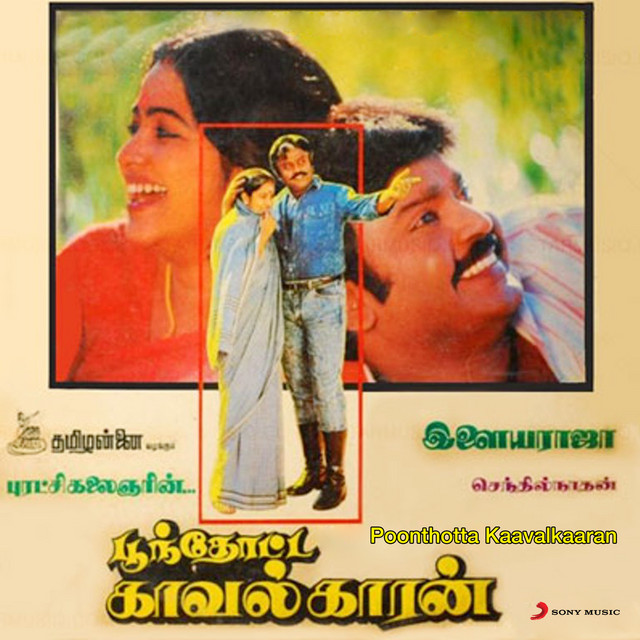
Poonthotta Kaavalkaaran album cover
Lyrics & meaning

Kavalkara Kavalkara

From Poonthotta Kaavalkaaran · 1988

Lyricist
Gangai Amaran
Singer
Ilayaraja
Music director
Ilayaraja
Movie name
Poonthotta Kaavalkaaran
Movie release year
1988
Lyrics added on
6 May 2026

Lyrics & meaning

♫ Tanglish lyrics
↻ English translation
Kaavalkkaara kaavalkkaara
Kaadu kakkum kaavalkkaara
Naadhiyatha naattai ingae
Yaaru vandhu kaakka poraa
Ezha padum paadu
Engalukku yaaru
Indha nila maarum kaalam thaan
Eppozhudhu
Kaavalkkaara kaavalkkaara
Kaadu kakkum kaavalkkaara
Mannilae nanjai undu
Punjaiyum karutha kaadum undu
Mannilae kottum mazha
Nanjaikkum mattumae peivadhillai
Thannikkum kaathukkum thaan
Baedhangal enbadhu endrumae illae
Mannilae makkalilae
Yettra irakkangal maaravillae
Naadhiyum attra
Ezhaigatkku jaadhi edhukku
Needhiyum attra naattil
Naamum vaazhvadhu edharkku
Idhu maara naadu thaera
Nalla vazhithaan kaattidappaa
Kaavalkkaara kaavalkkaara
Kaadu kakkum kaavalkkaara
Naadhiyatha naattai ingae
Yaaru vandhu kaakka poraa
Nalla payir kaapadharkku
Thottathukkum oru vaeli undu
Vaeliyaiyum thaandi vandhu
Aadum maadum angu meivadhundu
Manushan vaeli ittaa
Aadum maadum meera nyaayam undu
Vaeliyae thinbatharkku
Vaeliyum kaavalum ennathukku
Mathavanukku buthi solla
Buthi irukku
Thanna thirutha
Buthimathi enga irukku
Idhu maara naadu thaera
Nalla vazhithaan kaattidappaa
Kaavalkkaara kaavalkkaara
Kaadu kakkum kaavalkkaara
Naadhiyatha naattai ingae
Yaaru vandhu kaakka poraa
Ezha padum paadu
Engalukku yaaru
Indha nila maarum kaalam thaan
Eppozhudhu
Kaavalkkaara kaavalkkaara
Kaadu kakkum kaavalkkaara
Naadhiyatha naattai ingae
Yaaru vandhu kaakka poraa
O watchman, O watchman,
O watchman guarding the forest,
In this land with no one to care,
Who will come to protect it?
Oh, the misery of the poor,
Who is there for us?
The time for this plight to change—
When will it ever come?
O watchman, O watchman,
O watchman guarding the forest,
On this earth, there are fertile lands,
Dry fields, and dense dark forests.
The rain that pours upon this earth
Does not fall only on fertile soil.
To the water and the wind,
Differences have never mattered.
Yet among the people on this earth,
Inequality has never changed.
For those with no one to lean on,
Why do the poor need caste?
In a land without any justice,
Why should we even live?
For this to change and the nation to heal,
Please show us a good way forward!
O watchman, O watchman,
O watchman guarding the forest,
In this land with no one to care,
Who will come to protect it?
To protect the good crops,
Even a garden has a fence.
Breaching through that fence,
Goats and cattle often graze.
If a man puts up a fence,
It is natural for cattle to stray past it.
If the fence itself eats the crops,
What is the use of a fence and a guard?
To give advice to someone else,
Everyone has the brains.
To correct oneself,
Where does the good sense go?
For this to change and the nation to heal,
Please show us a good way forward!
O watchman, O watchman,
O watchman guarding the forest,
In this land with no one to care,
Who will come to protect it?
Oh, the misery of the poor,
Who is there for us?
The time for this plight to change—
When will it ever come?
O watchman, O watchman,
O watchman guarding the forest,
In this land with no one to care,
Who will come to protect it?
Male
Male
Male
Male
Male
Male
Male
Male
Male
Male
Male
Male
Male

Beyond the translation

Overall song meaning

This song is a deeply philosophical and socially conscious lament sung from the perspective of the marginalized working class. Addressing an allegorical 'guard' (symbolizing rulers, law enforcers, or leaders of society), the speaker questions who will protect a nation left orphaned by institutional corruption and social division. The lyrics draw parallels with nature—noting that rain, air, and water treat wet lands and dry lands equally without discrimination—to critique human societal divides such as caste and economic inequality. The second stanza uses the powerful Tamil proverb metaphor of 'the fence eating the crop' (Vaeliyae thinbadhu) to condemn corrupt authorities who exploit the very people they are meant to safeguard. The song concludes with a call for self-reflection and true leadership, questioning when society will finally break free from hypocrisy and injustice.

Writing craft

Poetic devices

Edhugai (Second-letter Rhyme)

Kaadu kakkum kaavalkkaara / Naadhiyatha naattai ingae

Repetition of the second consonant sound 'dhu' in adjacent lines ('Kaadu' / 'Naadhiyatha').

Monaai (Alliteration)

Kaavalkkaara kaavalkkaara / Kaadu kakkum kaavalkkaara

Repetition of the initial letter 'K' in words within the same line.

Metaphor & Proverb (Vaeli Payirai Maelvadhu)

Vaeliyae thinbatharkku / Vaeliyum kaavalum ennathukku

Uses the traditional Tamil idiom of 'the fence eating the crop' as a metaphor for corruption among protectors and leaders.

Personification of Nature

Thannikkum kaathukkum thaan / Baedhangal enbadhu endrumae illae

Attributes the moral quality of impartiality to natural elements like rain, wind, and water to contrast with human bias.

Did you know?

Trivia

The song 'Kaavalkkaara Kaavalkkaara' was composed and sung by Maestro Ilaiyaraaja himself for the Vijayakanth-starrer 'Poonthotta Kaavalkaaran' (1988). The movie was a massive commercial success, and Ilaiyaraaja's raw, evocative vocal delivery brought immense emotional weight to Gangai Amaran's socio-political lyrics.

Keep listening

Songs with a similar feeling

From the same album

More songs from Poonthotta Kaavalkaaran

View album

Spot an issue?

Help us improve the lyrics or English translation.